
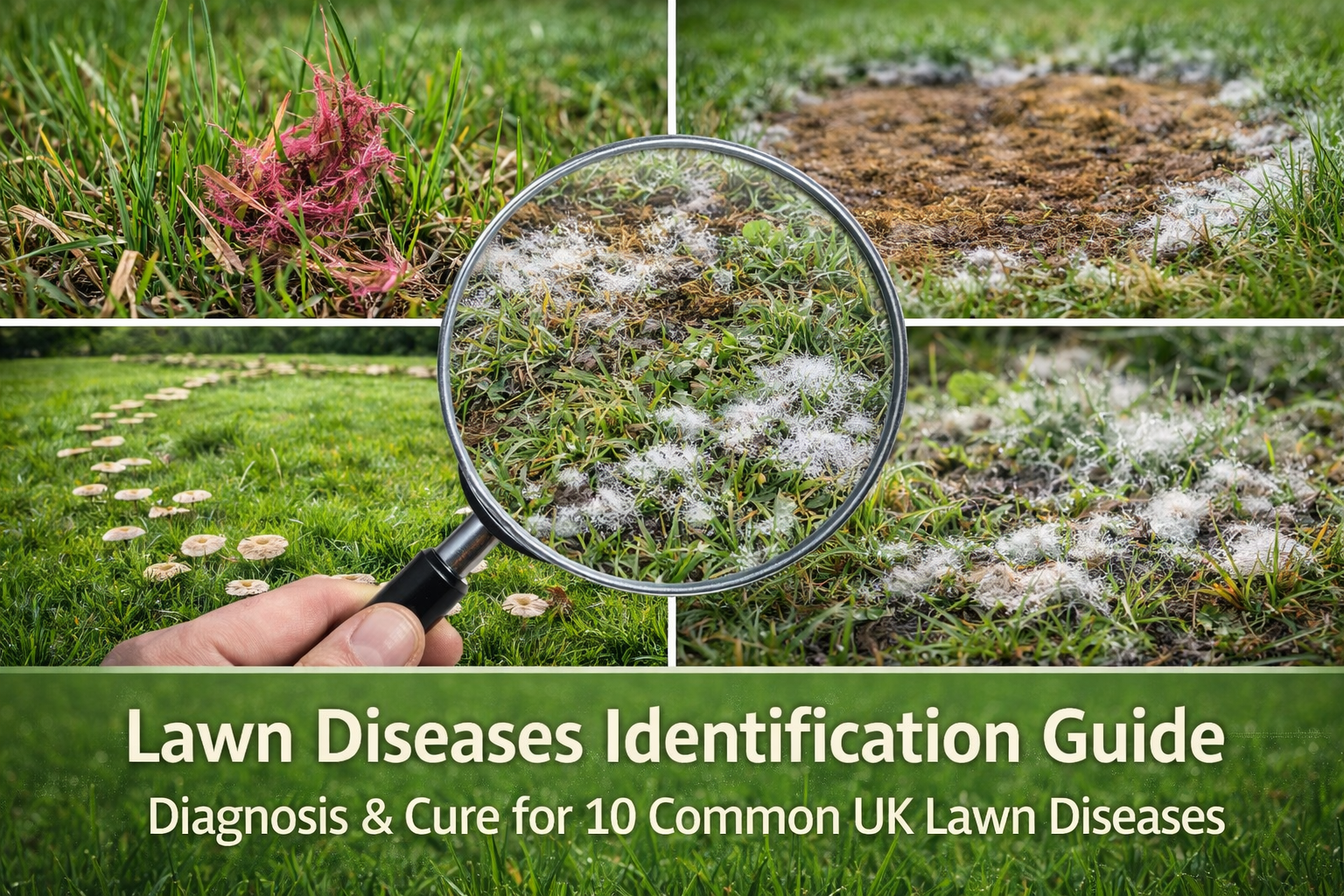
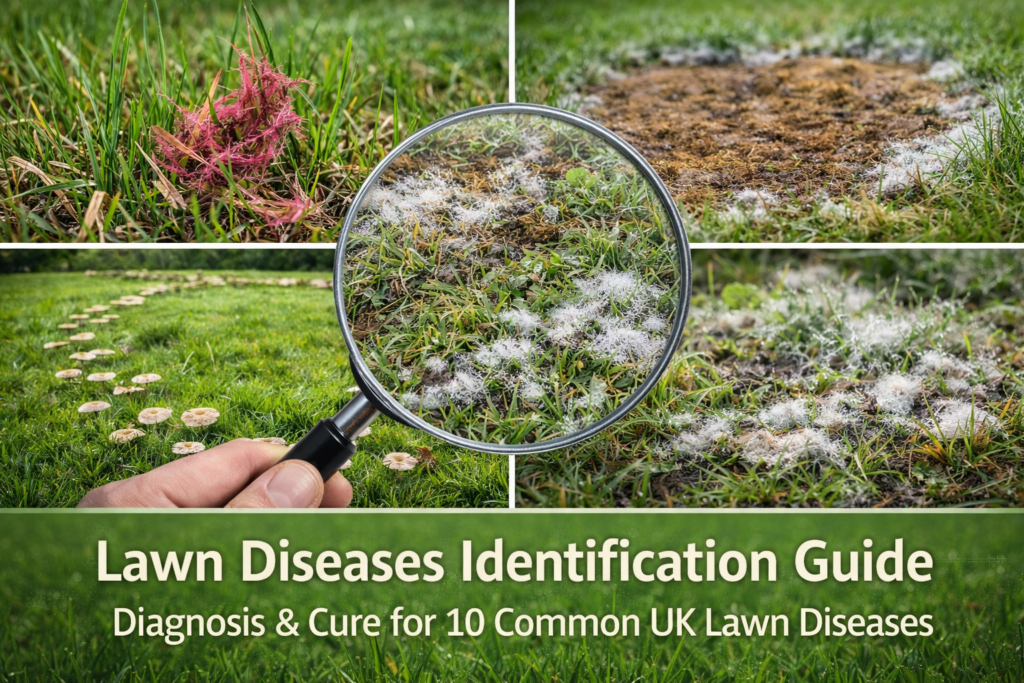
If your lawn’s suddenly looking a bit… haunted (patchy, spotty, fuzzy, or suspiciously slimy), you’re not alone. Lawn diseases identification can feel like playing detective with a magnifying glass and a mild sense of panic. The good news? Most lawn diseases in the UK are totally manageable once you know what you’re looking at — and you can usually fix them with better mowing, smarter watering, and a few targeted tweaks.
This guide will help you self-diagnose what’s happening, understand why it’s happening, and choose the best cure — including straightforward lawn fungus treatment options when cultural fixes aren’t enough. We’ll also cover the classic brown spots in lawn mystery and the ever-common red thread lawn disease.
A quick reassurance before we start
Most “lawn disease” problems are really stress problems. Fungi and pathogens often move in when grass is weakened by:
- compacted soil
- poor drainage
- scalping (mowing too low)
- too much thatch
- low nutrients
- shade and stagnant air
- warm days + cool, damp nights
Think of it like this: the disease is the opportunist, the stress is the open door.
First: Do This 5-Minute Diagnosis Check (Before You Treat Anything)
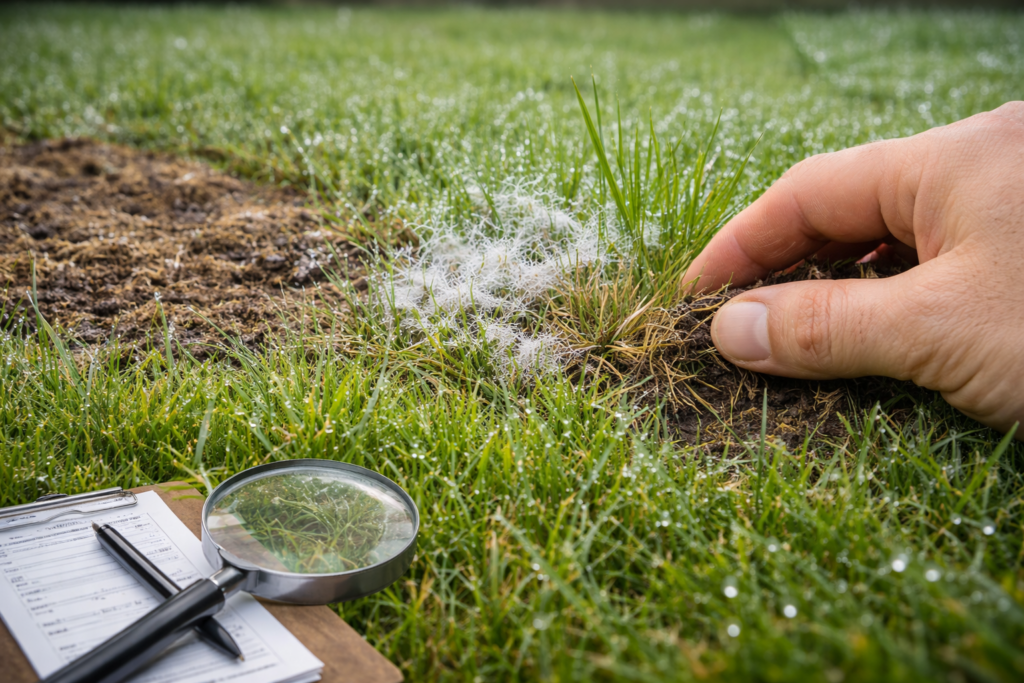
Before you reach for a cure, do a quick mini-audit. It’ll stop you treating the wrong problem (very common) and wasting time.
1) Pattern: Is it patches, rings, or widespread?
- Small scattered spots → often leaf-spot style diseases, nutrient issues, urine spots, or mower damage.
- Circular patches or rings → fairy rings, patch diseases.
- Large thinning areas → compaction, drought stress, chafer/leatherjackets, or chronic shade.
2) Time: When did it show up?
- Early spring → Microdochium patch (fusarium), red thread, leaf spot.
- Summer → dollar spot, brown patch, fairy rings, drought-triggered issues.
- Autumn → Microdochium patch, leaf diseases, algae/moss increases.
3) Morning clue: Is there “stuff” on the grass?
Go out early (before the sun dries it).
- White cobwebby threads → often Microdochium patch.
- Powdery white coating in shade → powdery mildew.
- Orange dust that stains fingers → rust.
4) Feel the turf
- Spongy underfoot? That’s often thatch holding moisture.
- Rock hard and water sits on top? Likely compaction.
- Slimy surface in shade? Could be algae.
5) Root check (the underrated move)
Pull gently on grass in a bad patch:
- If it lifts easily with weak roots → could be pests or root disease.
- If roots are present but blades are damaged → often foliar disease (leaf-level).
The Golden Rule: Fix the Conditions, Not Just the Symptoms
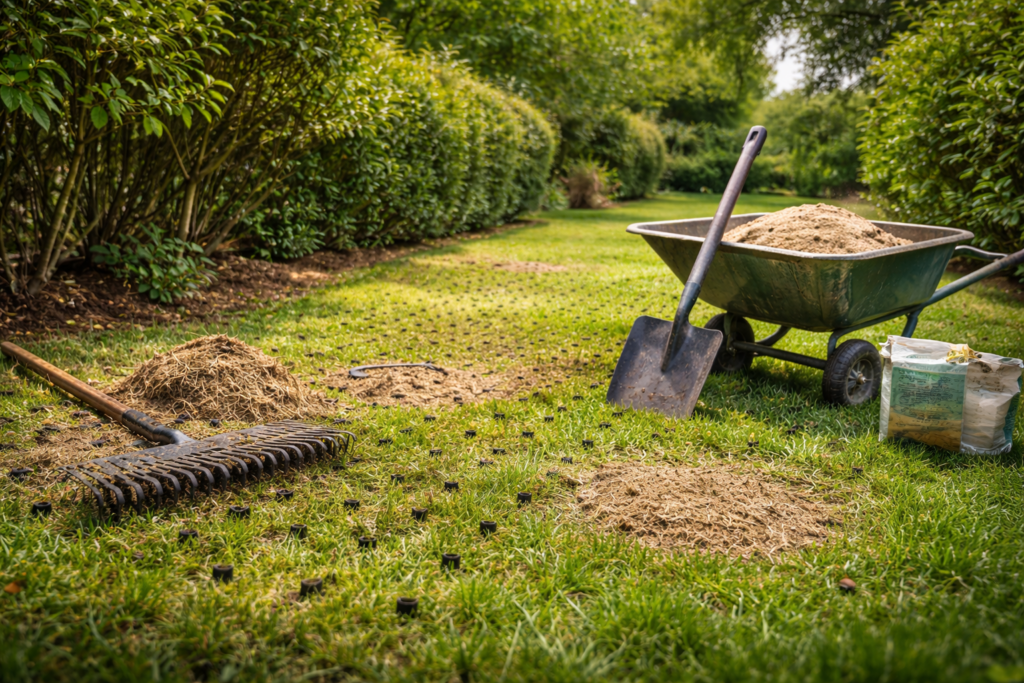
Fungus thrives when the lawn stays wet for long periods and airflow is poor. So your long-term win is usually:
- mow correctly
- feed appropriately
- reduce thatch
- improve drainage/compaction
- water smarter (less often, more deeply, and earlier)
Now let’s get specific.
1) Red Thread (Laetisaria fuciformis)

Key signs (the giveaway)
- Pink/red “threads” on the tips of grass blades (especially visible when damp)
- Patchy areas that look pale, thin, or straw-like
- Often appears in spring and autumn, especially in cool, wet weather
This is the classic red thread lawn disease and it’s very common in UK lawns.
Why it happens
Red thread loves lawns that are:
- underfed (low nitrogen)
- damp and slow-drying
- shaded or poorly ventilated
Cure (what actually works)
- Feed the lawn: a nitrogen-containing fertiliser helps the grass outgrow it.
- Improve airflow: trim overhanging shrubs, reduce shade where possible.
- Mowing: keep blades sharp and avoid mowing when wet.
- Remove clippings during outbreaks (so you’re not spreading it).
Most cases clear up quickly once feeding improves. Fungicides are rarely needed for red thread in domestic lawns.
2) Microdochium Patch (Fusarium Patch)
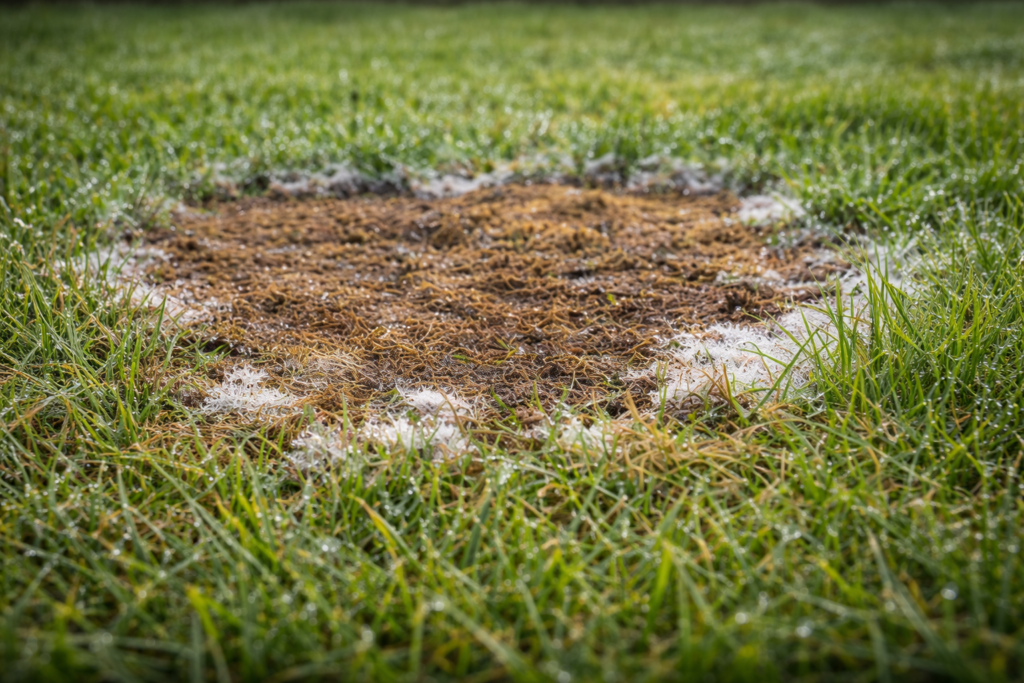
Key signs
- Circular patches 2–5cm that can merge into larger areas
- Colours range from straw, orange-brown, to dark brown
- In the morning, you may see white/pink cottony growth on the edges
When it shows up
Often in autumn through early spring, especially in mild, wet winters.
Why it happens
- Excess surface moisture (heavy dew, poor drainage)
- Too much thatch
- Mowing too low going into winter
- Overfeeding nitrogen late in the season
Cure
- Brush or switch the lawn in the morning to remove dew (sounds quaint, works brilliantly).
- Aerate (solid tines or hollow tines if compaction is bad).
- Reduce thatch with scarification when growth is active (usually spring/autumn).
- Adjust feeding: avoid high nitrogen late autumn; use an autumn feed higher in potassium instead.
Fungicide options for home lawns can be limited and change over time, so focus on cultural controls first — they’re the backbone of prevention.
3) Dollar Spot
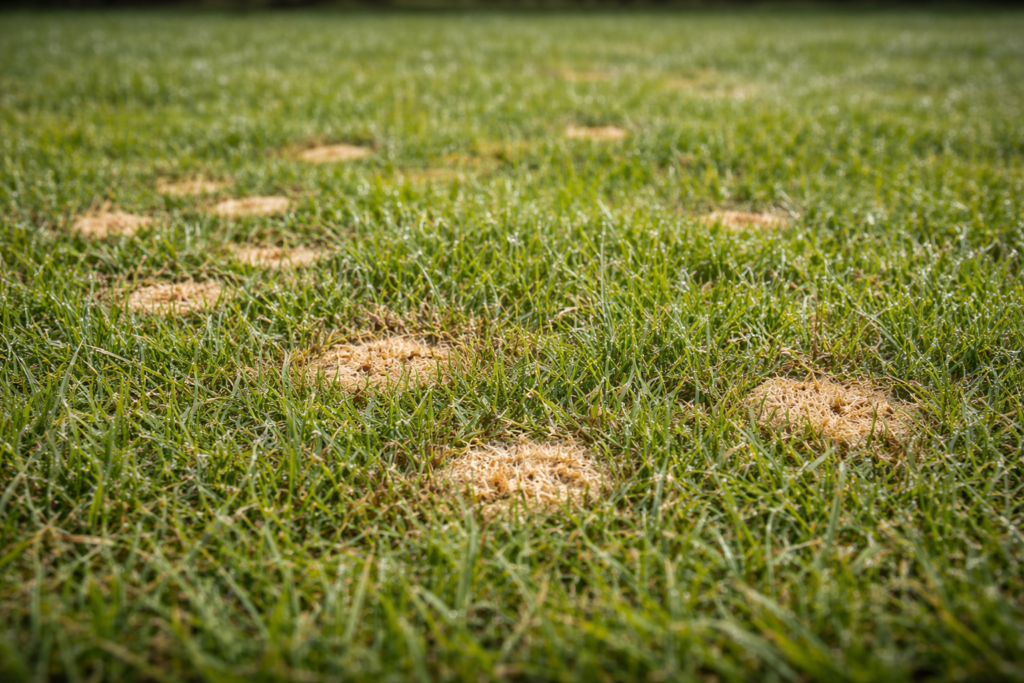
Key signs
- Small, round, straw-coloured spots (about the size of a 10p to 50p coin)
- Spots can merge into larger blighted areas
- Sometimes you’ll see fine, cobwebby mycelium early in the morning
Why it happens
- Low nitrogen
- Drought stress (even if it’s not scorching, grass can still be stressed)
- Heavy dew and low airflow
Cure
- Light feed to correct nitrogen deficiency.
- Water better: deep and infrequent, early morning.
- Reduce dew and shade.
- Keep mowing height sensible (don’t scalp).
Dollar spot is one of those diseases where improved nutrition often makes the biggest difference.
4) Brown Patch
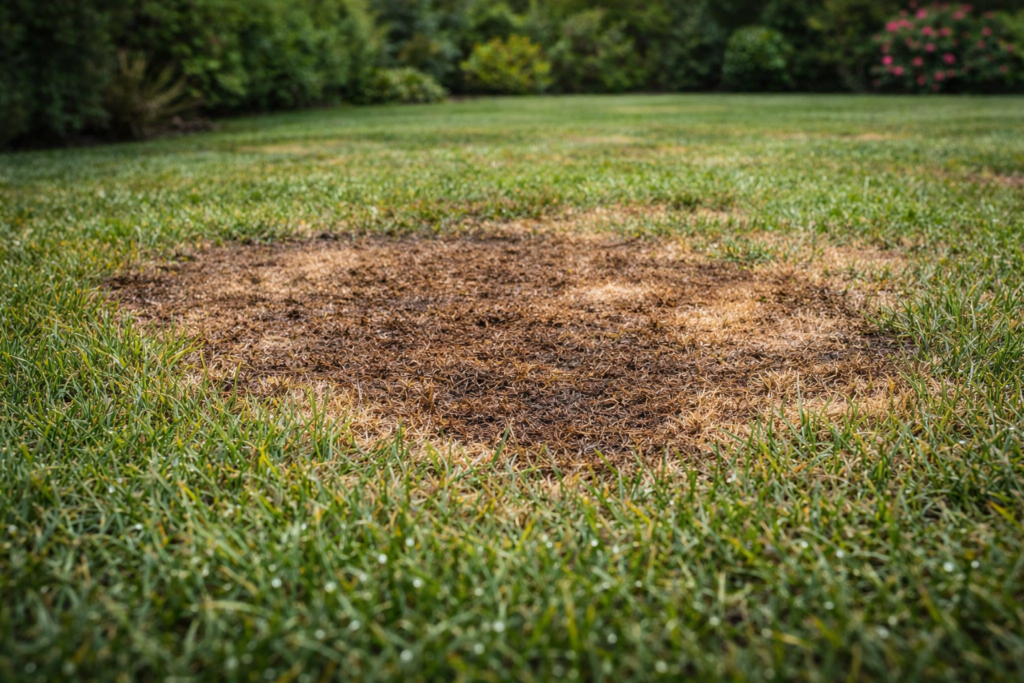
Key signs
- Larger brown patches (often 20–50cm wide, sometimes bigger)
- The grass can look “smoked” or scorched
- Can be mistaken for drought stress, but watering doesn’t fix it quickly
Conditions that trigger it
Warm, humid spells — especially with overnight moisture. It can appear in UK summers during muggy periods.
Cure
- Avoid heavy nitrogen feeding during hot spells.
- Improve airflow and reduce thatch.
- Water early morning only, and only if needed.
- If it keeps recurring, consider a targeted lawn fungus treatment product that’s approved for lawn use in the UK and follow the label carefully.
5) Leaf Spot / Melting Out
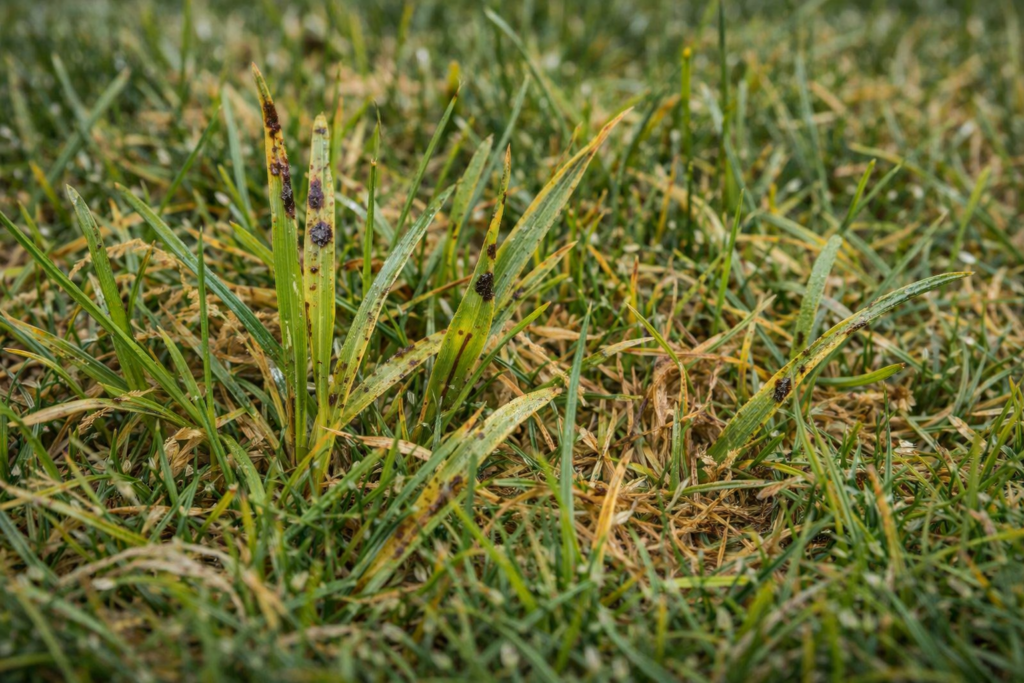
Key signs
- Small dark spots on blades that expand into larger lesions
- Grass can thin out (“melting out”), especially in stress conditions
- Often happens after weather swings or when the lawn is weak
Why it happens
Stress + prolonged leaf wetness. Overwatering and low mowing heights make it worse.
Cure
- Raise mowing height slightly.
- Avoid watering in the evening.
- Feed moderately to support recovery.
- Improve drainage/airflow and avoid heavy traffic while it’s struggling.
6) Rust
Key signs
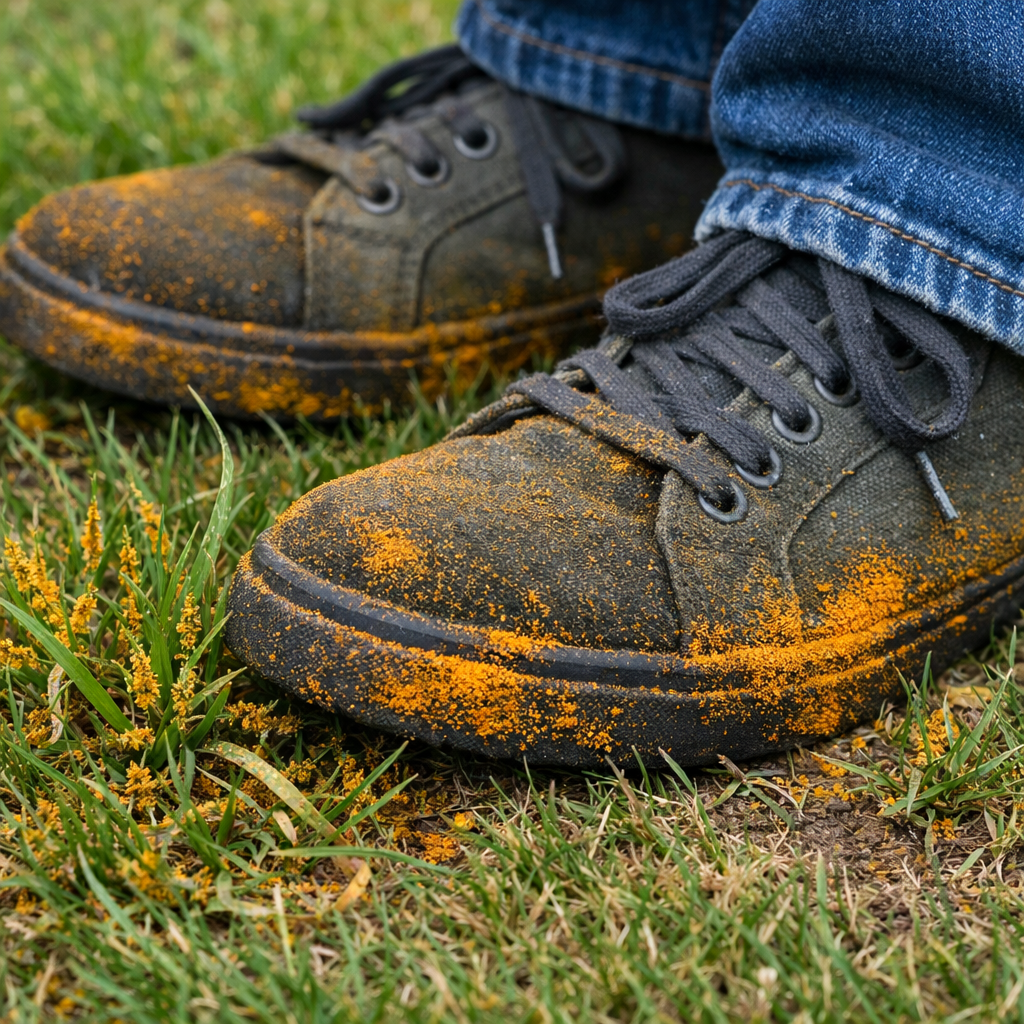
- Orange/yellow powder on blades
- It rubs off on shoes, hands, mower wheels (it’s messy and oddly convincing as “soil”, until it stains)
Why it happens
Rust often shows up on slow-growing lawns:
- low nitrogen
- shade
- late summer/autumn
Cure
- Feed (again — many diseases love a hungry lawn).
- Mow regularly (but don’t scalp) and remove clippings during active rust.
- Improve sunlight and airflow where possible.
Rust looks dramatic but is usually not catastrophic. It’s more of a “your lawn needs a pep talk” disease.
7) Fairy Rings
Key signs
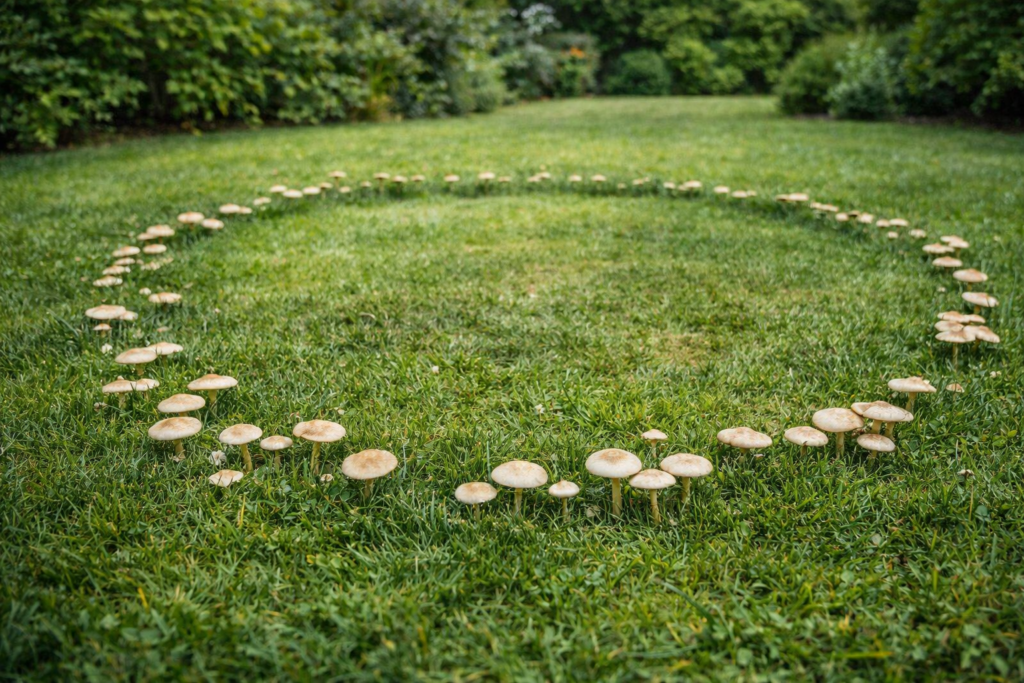
- Rings or arcs of dark green grass, sometimes with mushrooms
- Sometimes a dead or brown ring inside the green ring
- Can be hard, water-repellent soil in the affected area
Why it happens
Fungi decomposing organic matter in the soil. The ring is where activity is strongest, altering nutrient availability and water movement.
Cure
- Aerate deeply in the ring area.
- Apply a wetting agent (helps water penetrate if soil becomes hydrophobic).
- Water slowly to soak through (a quick splash won’t cut it).
- Remove excess thatch and improve overall soil conditions.
Fairy rings are stubborn, but you can absolutely reduce the impact and visibility.
8) Slime Mould
Key signs
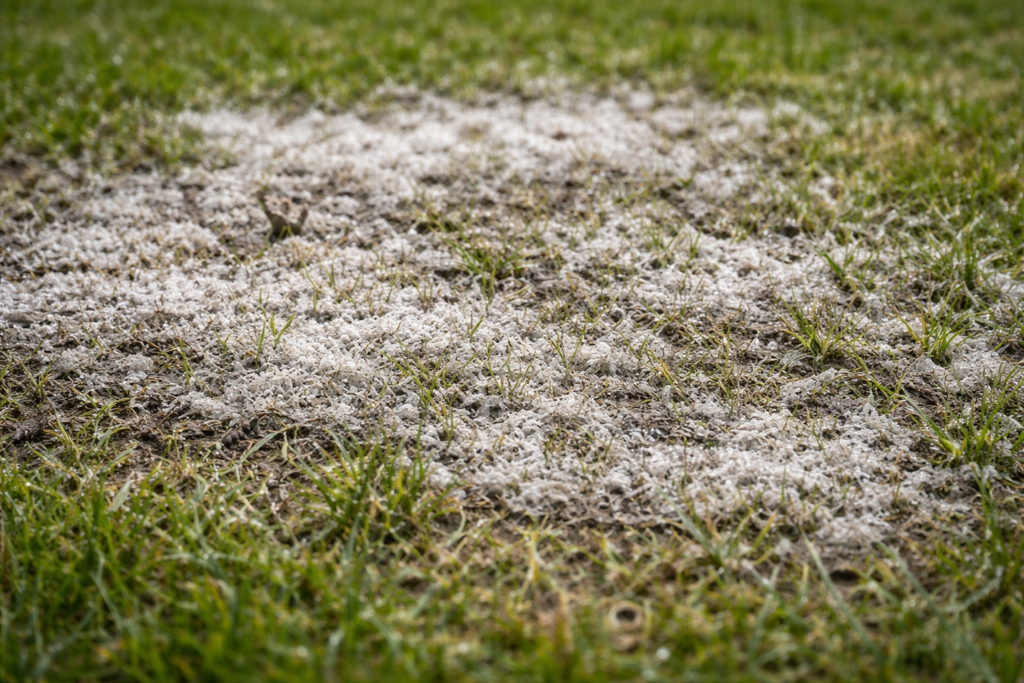
- Grey/white/black “goo” or crust on grass blades
- Looks alarming, like the lawn has been invaded by a sci-fi creature
- Typically appears after warm, wet periods
The truth
It feeds on organic matter, not the grass itself. It can shade blades temporarily, but it’s usually superficial.
Cure
- Brush it off with a broom or rake.
- Mow and remove clippings.
- Improve airflow and reduce excess thatch.
This one is mostly a cosmetic nuisance.
9) Powdery Mildew
Key signs
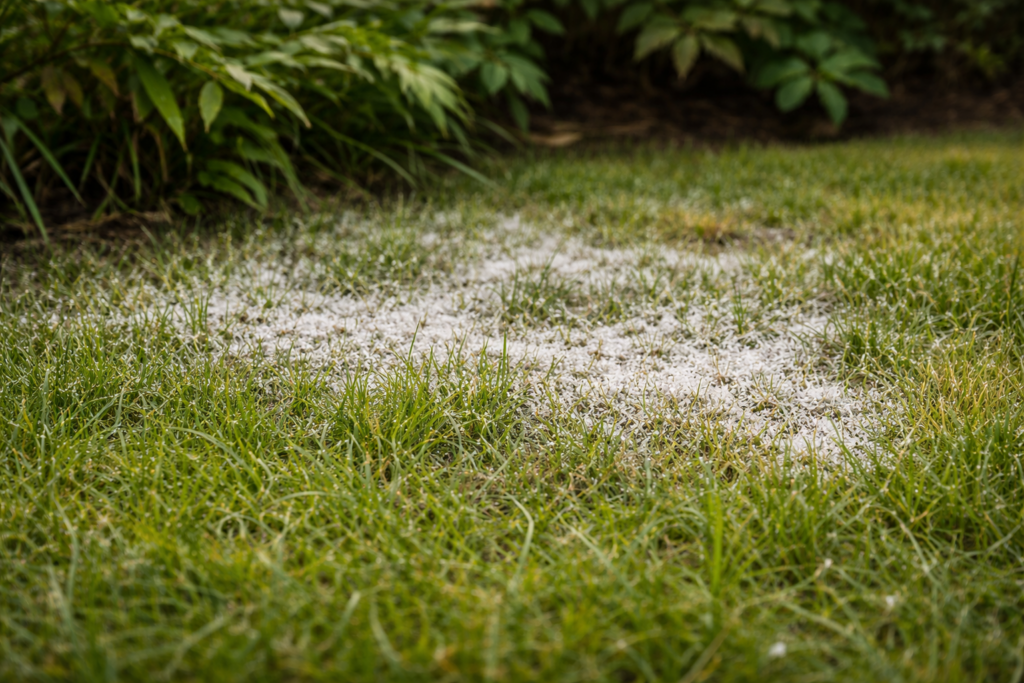
- White, powdery coating on leaf surfaces
- Most common in shade, poor airflow, and during mild, humid weather
Why it happens
Grass is shaded and stays damp, often with low vigour.
Cure
- Increase light and airflow (prune shrubs, thin branches if possible).
- Avoid overfeeding nitrogen in shade (soft, lush growth can be more susceptible).
- Raise mowing height slightly.
- Consider overseeding with more shade-tolerant grass mix in persistent areas.
10) Algae (and the “Why is it Green Slime?” Problem)
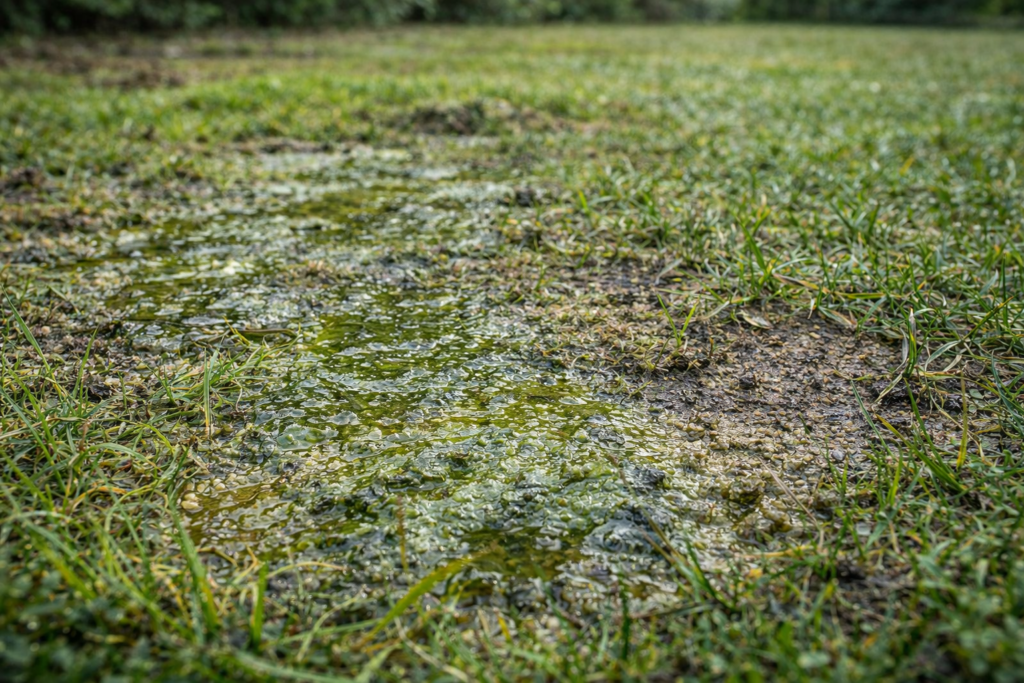
Key signs
- A slick green film on the soil surface
- Often in shaded, compacted, wet areas
- Grass struggles to establish or thins out
Why it happens
Algae signals poor drainage and compaction — it’s more of a symptom than the main disease.
Cure
- Aerate to relieve compaction.
- Improve drainage (topdress with sand/loam blend appropriate for your soil).
- Reduce shade and improve airflow.
- Avoid overwatering, and don’t let water sit on the surface.
The “Brown Spots in Lawn” Mystery: A Quick Troubleshooting Guide
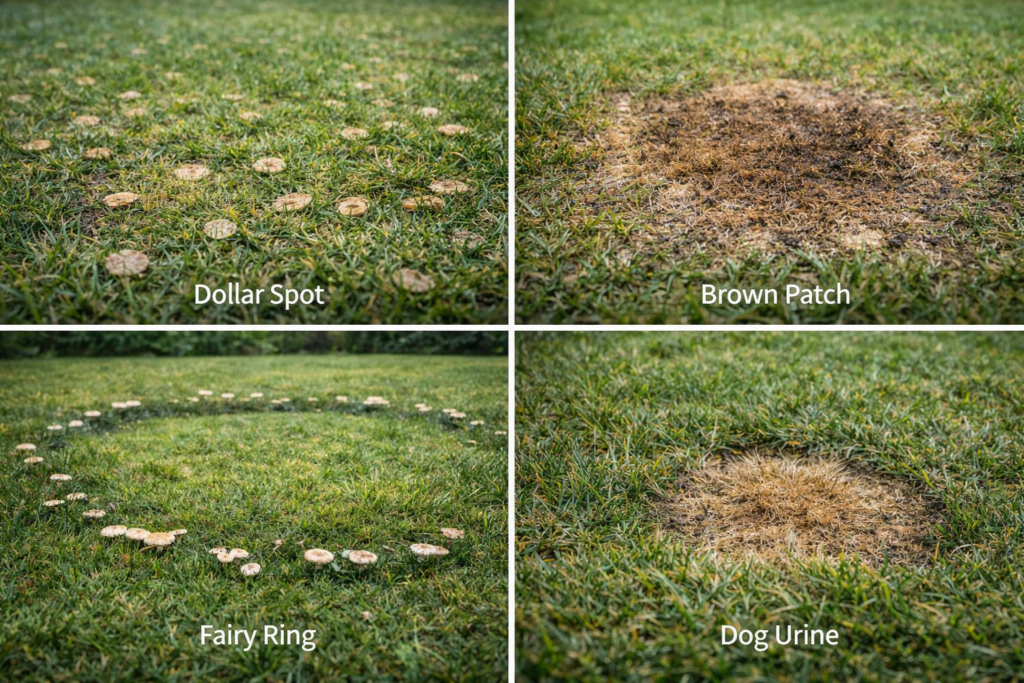
Because brown spots in lawn can mean about 12 different things, here’s a fast way to narrow it down.
If the spots are small and straw-coloured…
Likely: dollar spot, leaf spot, or nutrient stress.
If they’re larger and patchy after humid weather…
Likely: brown patch or Microdochium patch (depending on season).
If the spots have a dark green ring around them…
Possibly: fairy ring, or concentrated nutrients (sometimes from animal urine).
If spots appear where the dog wees…
Likely: urine scorch (often green ring, dead centre).
Fix: water the area after toileting, and keep nutrition balanced.
If the turf lifts like a loose carpet…
Consider pests (chafer grubs/leatherjackets) rather than disease.
Step-by-Step: Lawn Diseases Identification You Can Actually Trust
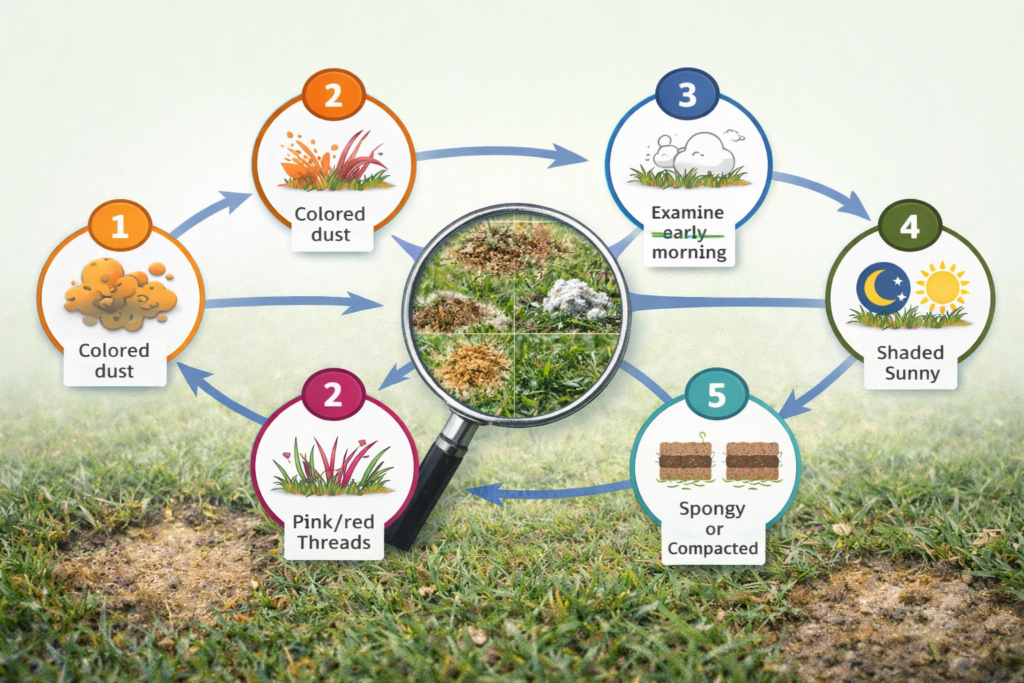
Use this simple decision flow when you’re not sure.
- Check for coloured dust
- Orange powder = rust
- Look for pink/red fibres on blades
- Pink/red threads = red thread
- Inspect early morning for cottony growth
- White/pink cobwebbing around patches = often Microdochium
- Assess location
- Mostly shade = powdery mildew, algae, or moss pressure
- Mostly sunny = dollar spot, brown patch, fairy ring
- Check soil condition
- Spongy = excess thatch (many fungal problems worsen)
- Hard/compacted = algae pressure, shallow roots, stress diseases
- Rule out simple causes
- Mower scalping lines?
- Sprinkler pattern issues?
- Recent overfeeding/underfeeding?
When to Use Lawn Fungus Treatment (and When Not To)
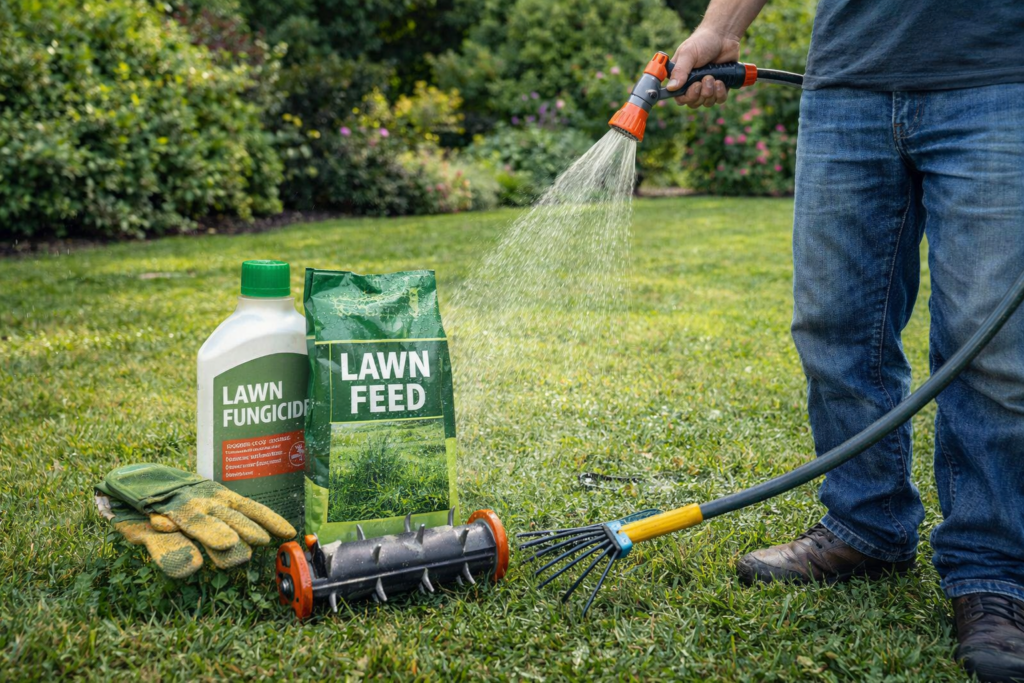
Here’s the honest bit: in most domestic UK lawns, you’ll get better results by fixing conditions than by chasing pathogens.
Cultural control first (your main toolkit)
- Mow higher (especially during stress): taller grass = deeper roots and better resilience
- Sharpen blades: ragged cuts invite disease
- Water early morning only, and only as needed
- Aerate compacted areas
- Reduce thatch (scarify when grass is actively growing)
- Feed appropriately (underfed lawns are disease magnets)
When a fungicide-style product makes sense
- You’ve repeatedly had the same disease in the same season
- The lawn is high-value (front garden pride patch) and outbreaks are severe
- Cultural changes are underway, but you need a short-term assist
If you go this route, make sure any lawn fungus treatment is:
- labelled for lawns/turf,
- suitable for your specific disease (not all products cover all pathogens),
- used exactly as instructed.
Prevention: Make Your Lawn Boring to Fungi (In a Good Way)
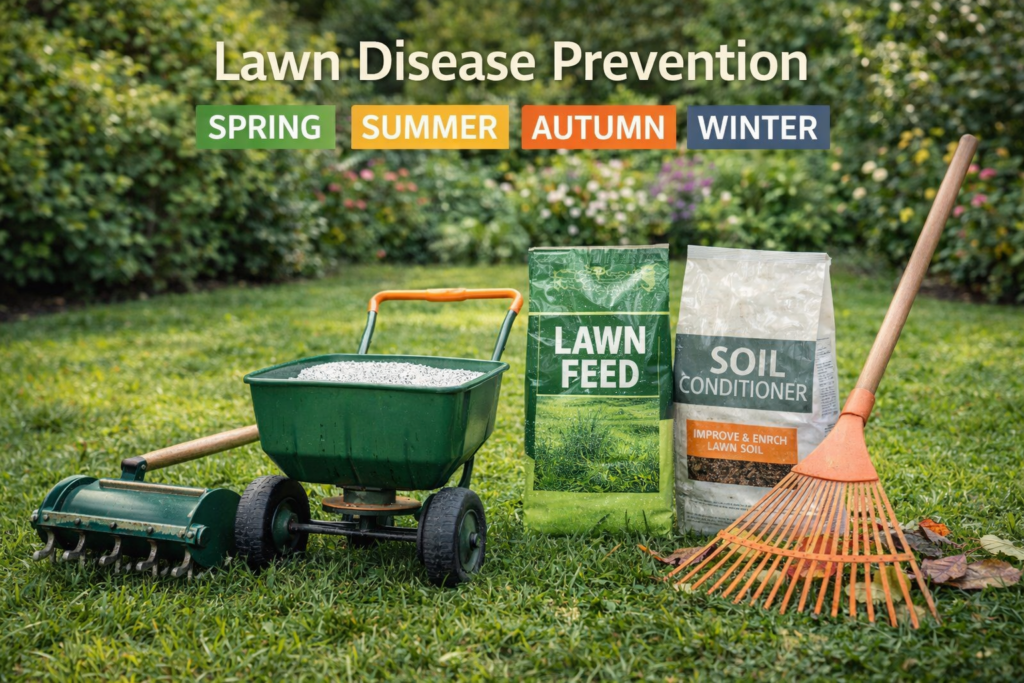
A healthy lawn is genuinely quite dull — steady growth, dry leaf surfaces, and strong roots.
The simplest long-term prevention plan
- Spring: light scarify (if needed), aerate, feed, overseed thin areas
- Summer: mow higher, water deep and infrequent, avoid excessive nitrogen in heat
- Autumn: remove debris, reduce thatch, aerate, autumn feed, manage shade and airflow
- Winter: avoid heavy traffic on wet/frozen turf, keep leaves off, manage drainage
A quick note on mowing height
If you only change one thing this month, make it this:
- aim for 4–6cm in many UK home lawns (higher in shade, slightly lower only when growth is strong and conditions are good)
FAQs (Because You’re Not the Only One Wondering)
How long does it take for a lawn disease to clear?
With the right fixes, many improve in 2–6 weeks. Some cosmetic ones (slime mould) clear in days. Recurring diseases mean conditions still favour them.
Should I rake out dead patches?
Light raking can help remove dead material and improve airflow, but don’t go nuclear when the grass is already stressed. For bigger damage, wait for active growth, then overseed.
Can I mow when the lawn has disease?
Yes — but ideally mow when dry, use sharp blades, and consider collecting clippings during active outbreaks to reduce spread.
Is it always a disease if I see brown patches?
Nope. Drought, dog urine, compaction, scalping, pests, and nutrient issues can all create similar symptoms. That’s why the pattern + season + morning check is so helpful.
0 Comments