
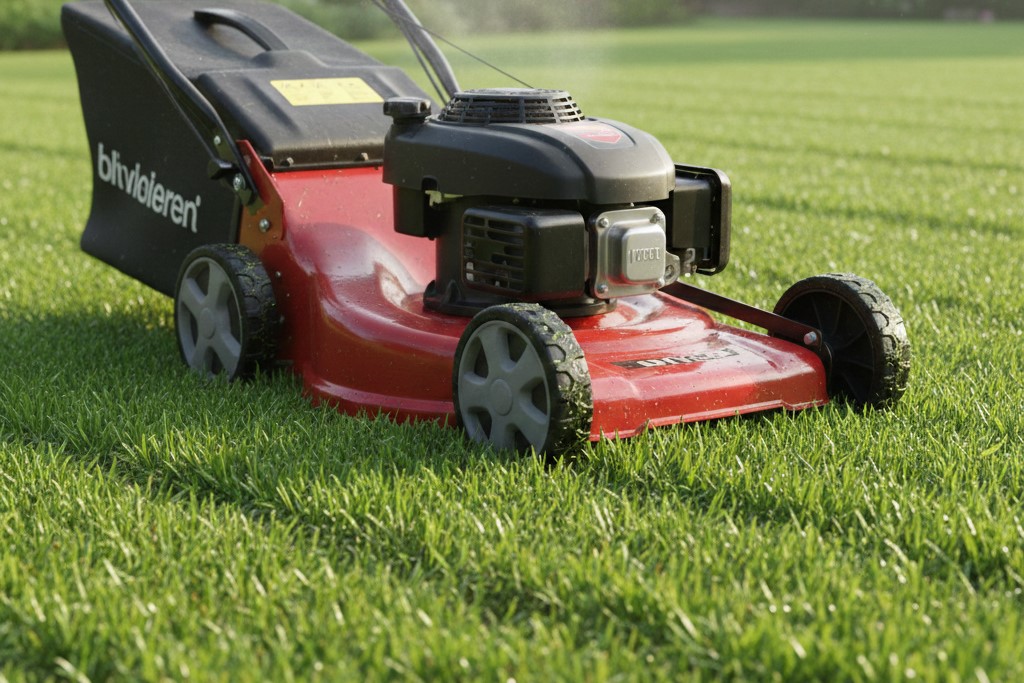
There is nothing quite like the sight of a fresh, emerald-green carpet beginning to emerge from what was once just a patch of brown dirt. Whether you’ve lovingly spread seed or laid down fresh turf, you’ve likely spent the last few weeks hovering over it like a protective parent. But now, the blades are reaching for the sky, and a big question looms: when to mow new grass without undoing all that progress?
It is a common worry. Mow too soon, and you risk pulling up the delicate young plants by their roots. Wait too long, and you end up with a tangled, floppy mess that struggles to photosynthesise properly. Getting the first time mowing grass right is about patience, a sharp blade, and a little bit of "lawn intuition."
In this guide, we are going to walk through the signs that your lawn is ready, the golden rules for that first cut, and how to treat your new grass so it grows back thicker and stronger than before.
Why Timing is Everything for Your First Mow
Think of your new lawn like a toddler. It is full of potential, but it’s also a bit wobbly on its feet. The root system is the most critical part of the plant at this stage. If the roots aren’t anchored, the vacuum suction of a lawnmower can literally pluck the grass out of the soil.
When we talk about when to mow new grass, we aren't just looking at the calendar. Growth rates in the UK can vary wildly depending on whether you’re in a sunny spot in Kent or a damp corner of the Highlands. Instead of counting days, we need to look at the grass itself.
The "Tug Test"
Before you even think about wheeling the mower out of the shed, you need to perform the tug test. Walk to a few different spots on your lawn and gently—very gently—pull on the grass blades.
- If the grass lifts easily: The roots haven't "knitted" into the soil yet. Give it another week.
- If you feel firm resistance: The roots are established, and the lawn is likely ready for its first encounter with the mower.
How Tall Should Grass Be Before the First Cut?
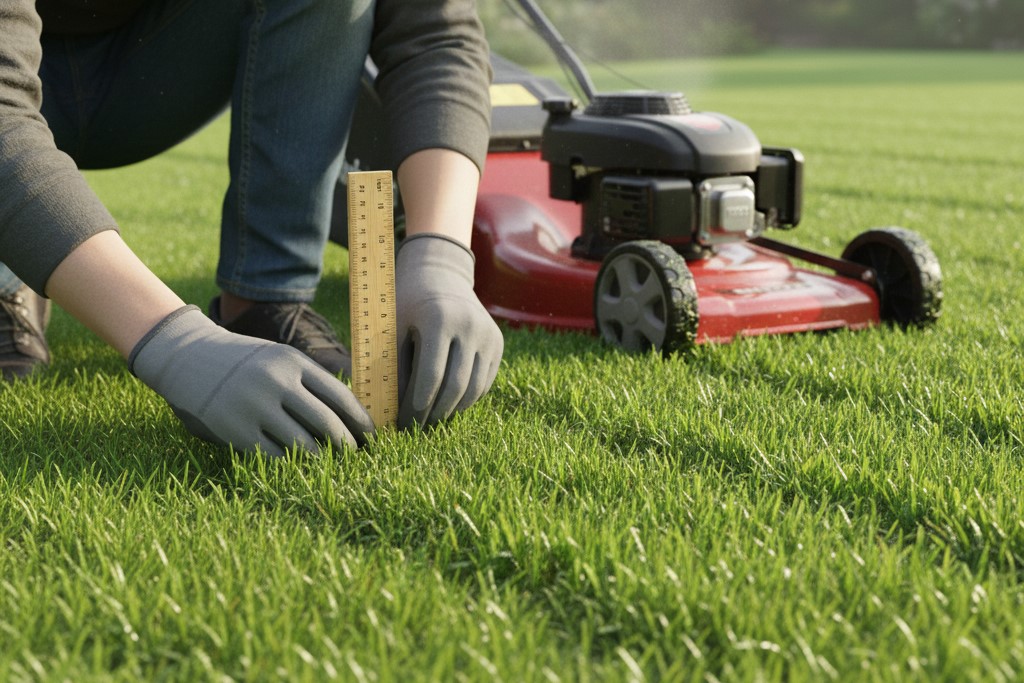
The most reliable indicator for your first mow is height. You might be tempted to let it grow long to "make sure it's strong," but letting it get too shaggy can actually shade out the smaller, slower-growing shoots.
So, how tall should grass be? For a standard UK domestic lawn (usually a mix of Ryegrass and Fescue), you should wait until the blades reach about 8cm to 10cm (3 to 4 inches).
The One-Third Rule
This is the golden rule of lawn care, and it is never more important than during the first cut. Never remove more than one-third of the grass blade height in a single session.
If your grass is 9cm tall, you should only be taking off the top 3cm. Taking off too much at once shocks the plant, forcing it to pour all its energy into repairing the blade rather than growing those all-important roots. For your first time mowing grass, aim for a finished height of around 6cm to 7cm. You can gradually lower the height over the next few mows as the lawn matures.
Preparation: Setting the Stage for Success
You wouldn't perform surgery with a rusty butter knife, and you shouldn't mow a brand-new lawn with blunt blades. Young grass is succulent and tender; it needs a clean, crisp "snip" rather than a jagged "tear."
1. Sharpen Your Blades
A dull blade will shred the grass, leaving the tips white and frayed. Not only does this look unsightly (making your lawn look silvery or brown), but it also opens the door for diseases like Red Thread or Leaf Spot. If you haven't sharpened your mower blades this season, now is the time.
2. Check the Soil Moisture
This is vital. Never, ever mow a new lawn when the soil is saturated. If the ground is soft, the heavy wheels of the mower will create ruts and compact the soil, suffocating the roots. Conversely, if it’s bone-dry and the grass is wilting, hold off. Aim for a day when the grass is dry to the touch but the soil is firm.
3. Clear the Pitch
Give the lawn a quick sweep to remove any stones, twigs, or stray "presents" from the local cat population. You want a clear run so you can focus entirely on your mowing line.
Step-by-Step: The First Mow Strategy
When the day finally arrives, don’t just charge in. Proper lawn establishment requires a bit of finesse.
Step 1: Set the Mower High
Adjust your mower to its highest possible setting. Even if you want a short, bowling-green finish eventually, the first cut is not the time to be ambitious. You just want to "tip" the grass to encourage it to grow outwards (tillering) rather than just upwards.
Step 2: Avoid the Grass Box (Maybe)
There is a bit of a debate here. If your grass is very thick, using a grass box is better to prevent the clippings from smothering the young plants. However, if the lawn is a bit sparse, leaving a very light dusting of clippings (mulching) can return some nitrogen to the soil. For most UK homeowners, using the collector is the safest bet for the first cut to ensure maximum airflow to the soil surface.
Step 3: Mow Slowly and Carefully
Take your time. Avoid making sharp turns with the mower, as the wheels can easily pivot and scuff up the fragile surface. Try to mow in straight, overlapping lines. If you have a mower with a roller, be careful not to use the heaviest setting, as you don't want to flatten the grass too firmly just yet.
Specific Advice for Cutting New Turf
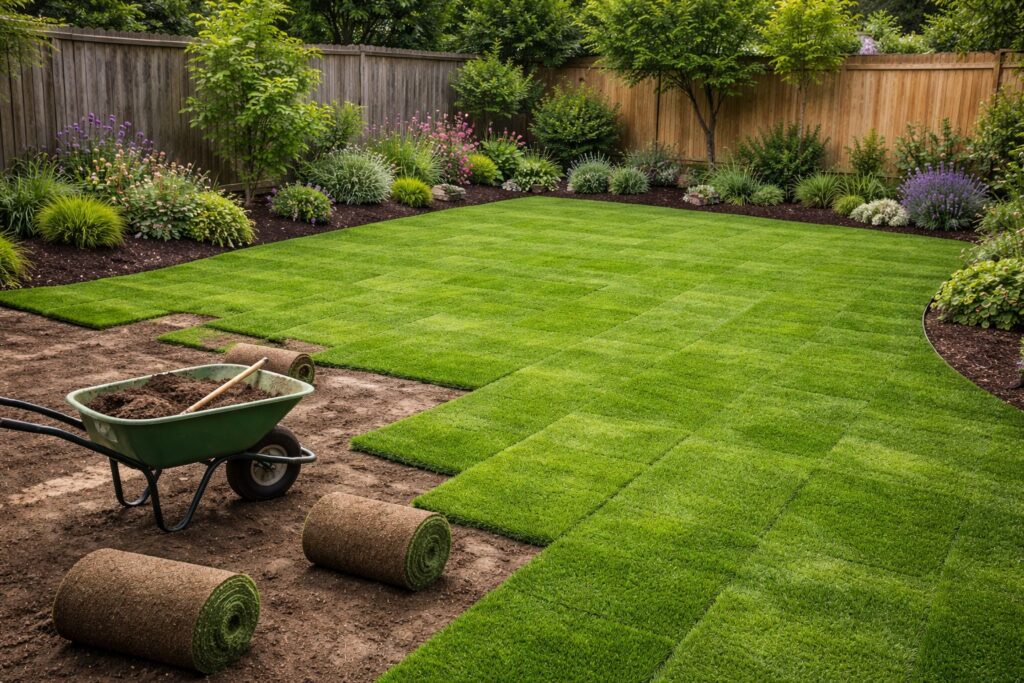
If you’ve laid turf rather than seeding, the rules are slightly different. Because you’ve essentially transplanted a "grown-up" plant, it can usually be mown sooner than a seeded lawn.
When cutting new turf, the timing is almost entirely dependent on root attachment. Usually, this takes between 14 and 21 days. Use the tug test mentioned earlier. If the edges of the turf rolls are still visible and lifting, put the mower away. Once the seams have started to disappear and the grass is firmly anchored, you can follow the same "one-third" height rules as a seeded lawn.
Pro Tip: When mowing new turf for the first time, try to mow across the direction the turf was laid. This helps to further knit the rolls together and prevents the mower wheels from sinking into the seams.
Post-Mow Aftercare: What Comes Next?
Congratulations! You’ve survived the first cut. But the work doesn't stop there. The way you treat the lawn over the next 48 hours will determine how quickly it thickens up.
Watering
After mowing, the grass is naturally a bit stressed. If the weather is dry, give the lawn a light watering to help it recover. Avoid a heavy soak; a gentle misting is perfect.
Feeding
If you haven't applied a "pre-seed" or "starter" fertiliser, you might be tempted to throw down some feed now. However, wait until you have mown the lawn at least three times before applying a standard high-nitrogen lawn feed. You want the plants to be stable enough to handle the boost.
Frequency
Once you’ve started, keep at it! Regular mowing is actually one of the best things you can do for a new lawn. It encourages the grass to spread sideways, filling in those annoying bare patches. Aim to mow once a week, or even every five days during the peak growing season, always sticking to that "one-third" rule.
Common Mistakes to Avoid
We’ve all been there—excited to see the finished product and rushing the process. Here are the "big three" mistakes to avoid when you're considering when to mow new grass:
- Mowing too low: This is the quickest way to turn a green lawn into a brown one. Scalping the lawn removes the part of the plant that produces food, effectively starving your new grass.
- Mowing while wet: UK weather is notoriously unreliable, but please wait for a dry spell. Mowing wet, young grass results in a messy cut and can lead to fungal issues.
- Using a heavy tractor mower: If you have a massive garden, try to use a smaller, lighter pedestrian mower for the first few months. The weight of a ride-on can be too much for a developing root system.
Troubleshooting: "My Grass Looks Yellow After Mowing!"
Don't panic. If your new lawn looks a bit pale or yellow after the first cut, it’s usually for one of two reasons:
- The "Pale Leg" Syndrome: The bottom of the grass blades haven't seen the sun because the top was too long. Now that they're exposed, they'll take a few days to green up through photosynthesis.
- Minor Stress: It’s a big change for the plant! Give it a drink, keep people and pets off it for a day or two, and it will likely bounce back stronger.
Summary: Your First Cut Checklist
Before you head out to the garden, run through this quick checklist:
- [ ] Has the grass reached 8-10cm?
- [ ] Does it pass the tug test?
- [ ] Is the soil firm and the grass dry?
- [ ] Is the mower set to its highest height?
- [ ] Are the blades sharp?
If you can tick all those boxes, you are ready to go. Remember, lawn care is a marathon, not a sprint. That first mow is just the beginning of your journey toward having the best lawn on the street.
0 Comments