
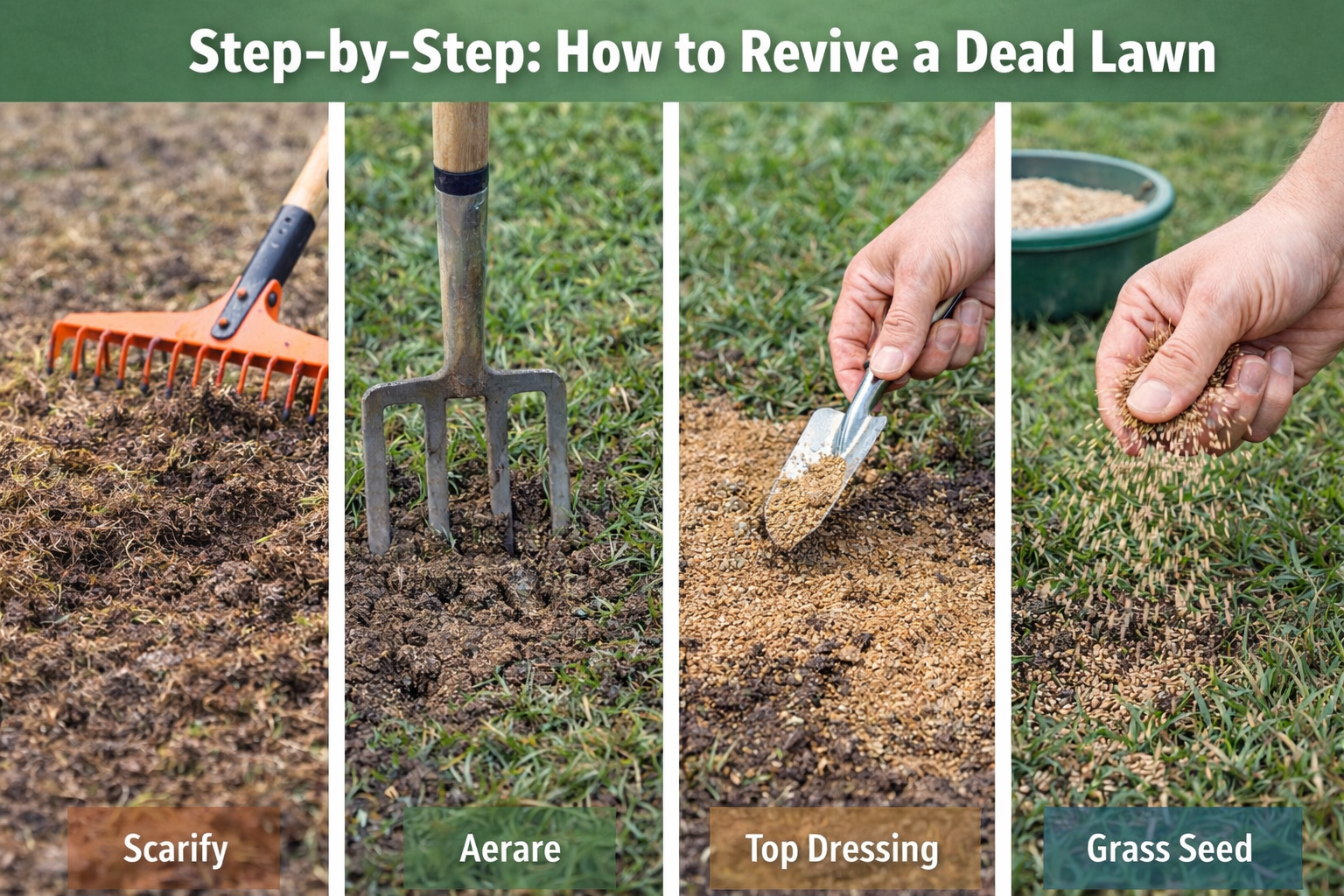
If you’re staring out the window wondering how to revive a dead lawn, you’re not alone. UK lawns take a beating—winter waterlogging, summer scorch, kids, dogs, the occasional “I’ll mow it later” procrastination spiral… it all adds up. The good news? Most “dead” lawns aren’t truly dead. They’re either dormant, patchy, compacted, starving, or a bit of everything. And that means you can absolutely bring it back—without hiring anyone or owning a shed full of mysterious chemicals.
This guide is a straight-talking, lawn renovation for beginners plan you can follow step-by-step. You’ll diagnose what’s actually going on, fix the cause (not just the symptoms), then rebuild a thicker, greener lawn that stays that way.
First: Is Your Lawn Actually Dead… or Just Playing Dead?

Before you start ripping things up like an overenthusiastic contestant on a gardening show, check whether the grass still has life in it.
The “Tug Test” (30 seconds, highly scientific)
Grab a small handful of the brown grass and gently pull.
- If it resists, there are roots holding on—your lawn is likely dormant or stressed, not dead.
- If it lifts out easily like old carpet, that section is genuinely dead (or it’s moss/thatched mess sitting on top of soil).
Look for new shoots at the base
Part grass blades with your fingers and look near the soil line:
- Green at the base = alive
- No green anywhere + brittle stems = likely dead
Time of year matters
In the UK, lawns often look grim after:
- Winter (waterlogging, low light, moss, compaction)
- Heatwaves/dry spells (drought stress and dormancy)
The RHS notes spring and autumn are ideal for lawn repairs because conditions are cooler and usually damper—perfect for recovery and seed germination.
Why Lawns “Die” in the UK (It’s Usually One of These)

Most lawn disasters come down to a handful of repeat offenders. Fix these, and your comeback is 10x easier.
1) Compacted soil (the silent killer)
If the soil is hard like a well-packed biscuit base, roots can’t breathe or drain properly. Compaction is common in:
- New-build gardens (builders’ rubble + squashed soil)
- High-traffic lawns (kids, dogs, frequent walking routes)
2) Poor drainage and waterlogging
Standing water encourages shallow roots, disease, and moss. If your lawn squelches for days after rain, drainage is a big part of your “dead lawn” story.
3) Drought stress and watering restrictions
Hot, dry periods can push grass into dormancy (brown but not dead). If there are hosepipe bans, you’ll need to be strategic and follow local rules. Temporary Use Bans (hosepipe bans) exist to reduce demand during drought conditions.
4) Nutrient starvation (or feeding at the wrong time)
A lawn can’t stay green on vibes alone. Low nitrogen = pale, thin growth. But feeding at the wrong time (or too much) can scorch.
5) Thatch and moss taking over
A thick thatch layer blocks water and seed contact with soil. Moss loves damp, compacted, acidic conditions—basically the UK’s default settings if the lawn’s neglected.
6) Shade
If you’ve got big trees, fences, or north-facing gardens, some grasses simply won’t thrive without shade-tolerant seed and adjusted expectations.
The Tools and Materials You’ll Need (No Fancy Kit Required)

You can do a full renovation with a basic setup:
- Spring-tine rake (or scarifying rake)
- Garden fork or hollow-tine aerator (fork works fine)
- Grass seed (choose the right type—more on that below)
- Top dressing (a sandy loam top dressing, or a DIY mix)
- Lawn feed (spring/summer or autumn formula depending on season)
- A spreader (handheld is fine) or a steady hand and a bucket
- Watering can (or hose if allowed locally)
- Mower with sharp blades
Optional but helpful:
- Lawn levelling rake
- Compost/soil improver (preferably peat-free)
On peat-free: the UK has been moving strongly away from peat in horticulture, with government policy aimed at ending peat sales to amateur gardeners (though the exact legislative position has been debated and delayed).
Step-by-Step: How to Revive a Dead Lawn (The Comeback Plan)
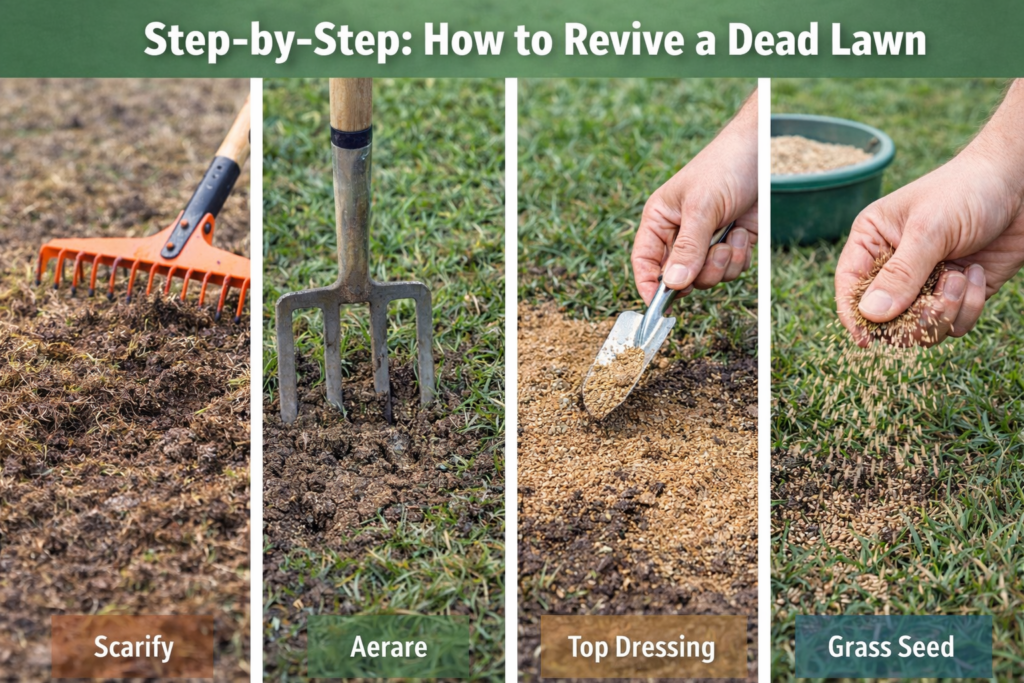
This is the main event. Follow it in order, and don’t skip steps unless you enjoy doing the same job twice.
Step 1: Mow (Yes, Even If It Looks Awful)
Set your mower higher than usual and take off the top growth. You’re not trying to scalp it—just making it easier to rake and work on.
Tip: If it’s very long, mow in two passes, lowering slightly the second time.
Step 2: Remove Debris, Thatch, and Moss (The “Uncomfortable” Part)
This is where the lawn starts to look worse before it looks better. Completely normal.
- Rake vigorously with a spring-tine rake.
- Pull out dead grass, moss, and thatch.
- Bag it up—don’t leave it sitting on the lawn.
If you’re dealing with heavy moss, that’s usually a sign of underlying issues (compaction, shade, drainage). Raking removes the symptom; the next steps fix the cause.
The RHS recommends scarifying/raking as part of lawn repair and renovation work, particularly when the lawn is in poor shape.
Step 3: Aerate (This Is the “Breathing Room” Your Lawn Needs)
Aeration is how you fix compacted soil and improve drainage—massive for revival.
Fork method (beginner-friendly):
- Push a garden fork 10–15 cm into the soil.
- Wiggle it slightly to open the ground.
- Repeat every 10–15 cm across bad areas (or the whole lawn if it’s generally sad).
If it’s very compacted: do a full-lawn aeration, not just patches.
Step 4: Top Dress to Improve the Soil (And Help Seed Take)
Top dressing does three big jobs:
- Improves drainage and soil structure
- Helps level minor bumps
- Creates perfect seed-to-soil contact
Apply a thin layer (roughly 5–10 mm) of top dressing and work it into the surface with the back of a rake.
RHS guidance often pairs aeration with top dressing as part of seasonal lawn care/repair routines.
DIY top dressing mix (simple version):
- 70% sandy loam/topsoil
- 30% compost/soil improver (peat-free if possible)
Step 5: Overseed (Or Reseed Bare Areas Properly)
Choosing grass seed (don’t just grab “cheap lawn seed”)
Pick based on your reality:
- Hard-wearing (kids/dogs): perennial ryegrass-heavy mixes
- Shady: shade-tolerant mix (often finer fescues)
- Ornamental: finer grasses, more maintenance
How to overseed the whole lawn
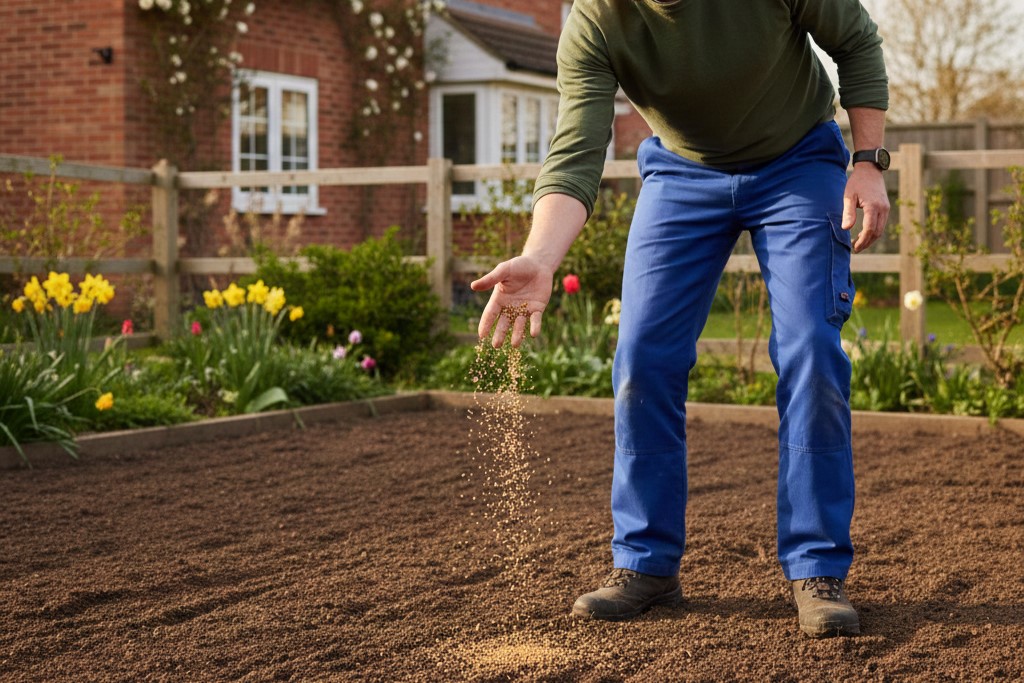
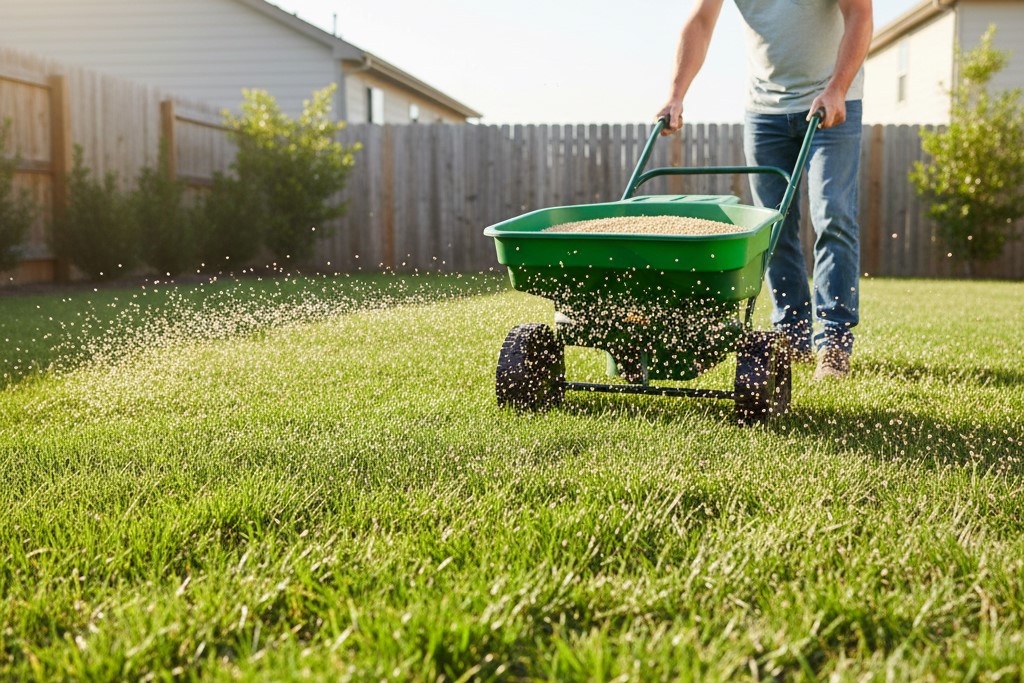
- Spread seed in two directions (north–south, then east–west) for even coverage.
- Lightly rake to tuck seed into the top dressing.
- Gently firm it down (walk over it in flat shoes, or use a roller lightly).
How to fix truly dead/bare patches
For each bald patch:
- Remove dead material and loosen the top 2–3 cm of soil
- Add a thin layer of top dressing
- Seed a bit heavier than the rest of the lawn
- Rake in and firm down
- Water carefully (see below)
This is the core of how to fix a patchy lawn without turning the whole garden into a mud spa.
Step 6: Water Smartly (Especially If Restrictions Apply)
New seed must stay consistently moist in the top layer of soil. That doesn’t mean flooding—it means light, frequent watering until germination.
Typical approach (weather-dependent):
- Light water daily (or twice daily in warm, breezy conditions) until germination
- Then reduce frequency but water more deeply to encourage roots downwards
If there’s a hosepipe ban in your area, check your local water company’s rules. The Environment Agency explains that Temporary Use Bans are used during drought to reduce water demand and protect supplies.
Beginner-friendly water-saving hacks that actually work:
- Water early morning or late evening to reduce evaporation
- Use a watering can for targeted patches
- Collect rainwater when possible (water butt life = easier life)
Step 7: Feed at the Right Time (Not With Random Panic Fertiliser)
Once seedlings are up and you’ve done the first couple of cuts, a gentle feed helps thicken growth.
- Spring/summer: choose a higher nitrogen feed for green-up
- Autumn: choose an autumn feed (typically lower nitrogen, higher potassium) to toughen the turf for winter
If you feed too early (before seed establishes), you can push weak, sappy growth or encourage weeds to party.
Step 8: The First Mow (The Moment It Feels Real)
When new grass reaches about 7–8 cm, give it its first cut.
Rules of survival:
- Sharp blade only (blunt blades shred seedlings)
- Set mower high
- Remove only the top third of growth
Then gradually lower your mowing height over the next few cuts.
Lawn Renovation for Beginners: The Simple “Week-by-Week” Timeline

This is a rough guide (weather always has the final say):
- Week 1: mow high, rake/scarify, aerate, top dress, seed
- Week 2–3: keep surface moist; avoid foot traffic like it’s freshly iced cake
- Week 3–6: first mow; keep mowing high; light feed if needed
- Week 6–10: lawn thickens; begin normal mowing routine; spot-treat weeds if necessary
And yes—your lawn may look a bit odd in the middle. That’s just the “awkward teenage phase”. It grows out of it.
Common Lawn Care Mistakes That Kill Comebacks (Avoid These and You’ll Fly)
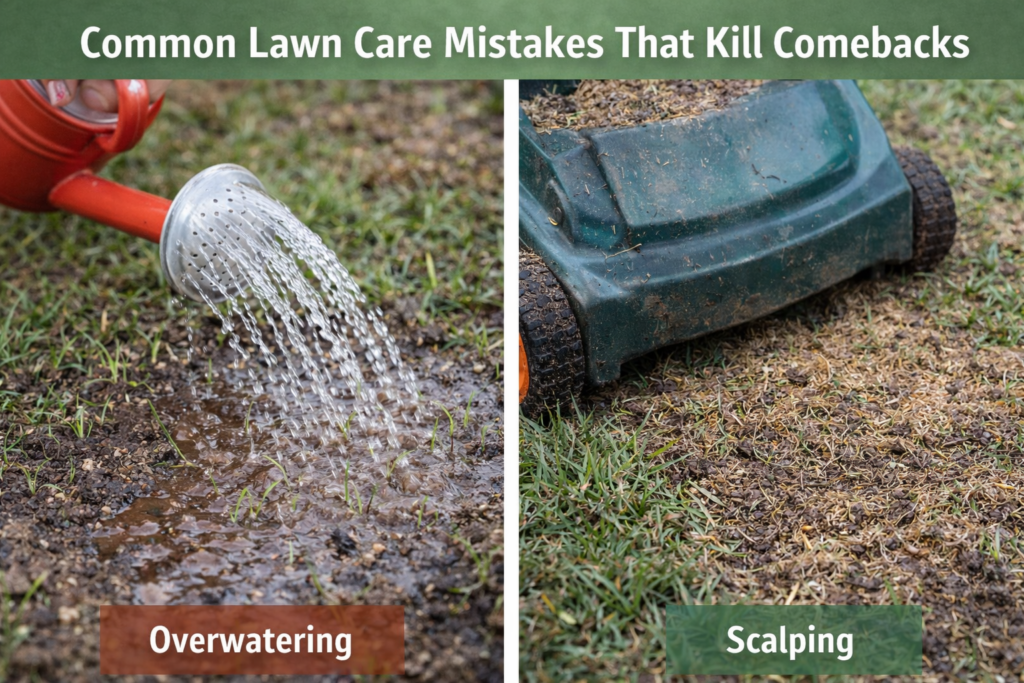
Let’s save you a load of effort by dodging the classics.
Mistake 1: Seeding onto hard, dry soil
Seed needs contact with soil. Tossing it onto a crunchy surface is basically feeding the birds.
Fix: rake in + top dress + firm down.
Mistake 2: Skipping aeration on compacted lawns
If water sits on the surface, seed struggles, roots stay shallow, and you’re back to square one.
Fix: fork aeration is enough for most beginner renovations.
Mistake 3: Overwatering (or watering in one big flood)
Flooding washes seed away and encourages weak roots.
Fix: light and frequent early, then deeper and less often later.
Mistake 4: Cutting new grass too short, too soon
Scalping seedlings is like making a toddler run a marathon.
Fix: first mow high, remove only a third.
Mistake 5: Using chemicals casually
If you use any pesticide or weedkiller, follow the label and keep it confined to the target area—this is both safety and legal common sense. The HSE emphasises that product labels provide the guidance for home/garden (amateur) pesticide use and that users should prevent spray drift.
What If the Whole Lawn Is Beyond Saving?
Sometimes, the kindest thing you can do is start fresh.
Consider a full restart if:
- More than ~50% is dead/bare
- The soil is full of rubble and can’t be improved with top dressing alone
- Drainage is so poor it stays waterlogged for days
Your two options:
- Reseed the entire lawn (cheaper, slower, needs careful watering)
- Returf (instant result, more expensive, still needs good prep)
The RHS notes that if a lawn is in really poor condition, you may need to re-lay or re-seed entirely rather than just patch it.
Quick Troubleshooting: “I Followed Steps… Why Is It Still Patchy?”
A newly renovated lawn can still end up thin if:
- Seed dried out during germination (most common)
- Seed mix didn’t match conditions (shade mix needed, or hard-wearing mix)
- Soil is too compacted (needs deeper aeration or repeated sessions)
- Birds stole the seed (lightly cover with top dressing, use netting on tiny areas)
- Nutrients are low (soil test helps, or a gentle feed at the right stage)
If you want to be extra methodical, a simple soil test kit can tell you if pH is off. Lawns generally prefer slightly acidic to neutral soil (often around pH 6–7), and extremes can affect nutrient availability and moss pressure.
Keep It Green: The “Minimum Effort” Maintenance Plan
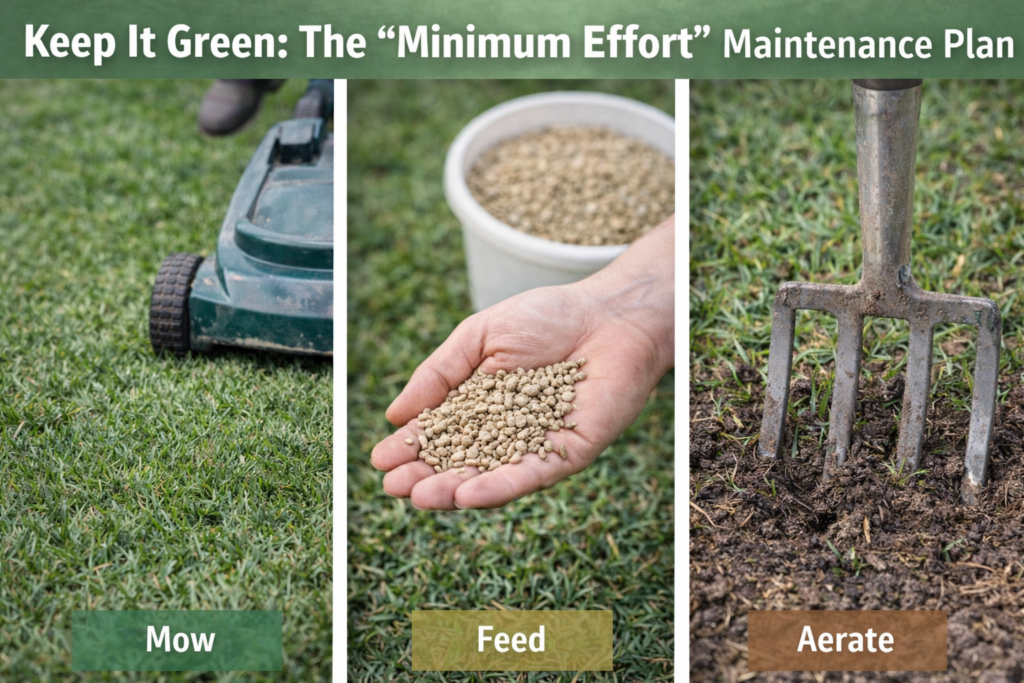
Once you’ve done the hard part, the goal is not to lose it again.
Mowing routine
- Mow little and often in growing season
- Avoid removing more than a third of the blade in one go
- Keep blades sharp
Feeding
- 1–2 feeds during the growing season (depending on lawn goals)
- Autumn feed if you want better winter resilience
Aeration
- Aerate at least once a year if you have compacted soil or heavy use
Reseed lightly each year (optional but brilliant)
A light annual overseed in autumn can keep density high and weeds out.
0 Comments