
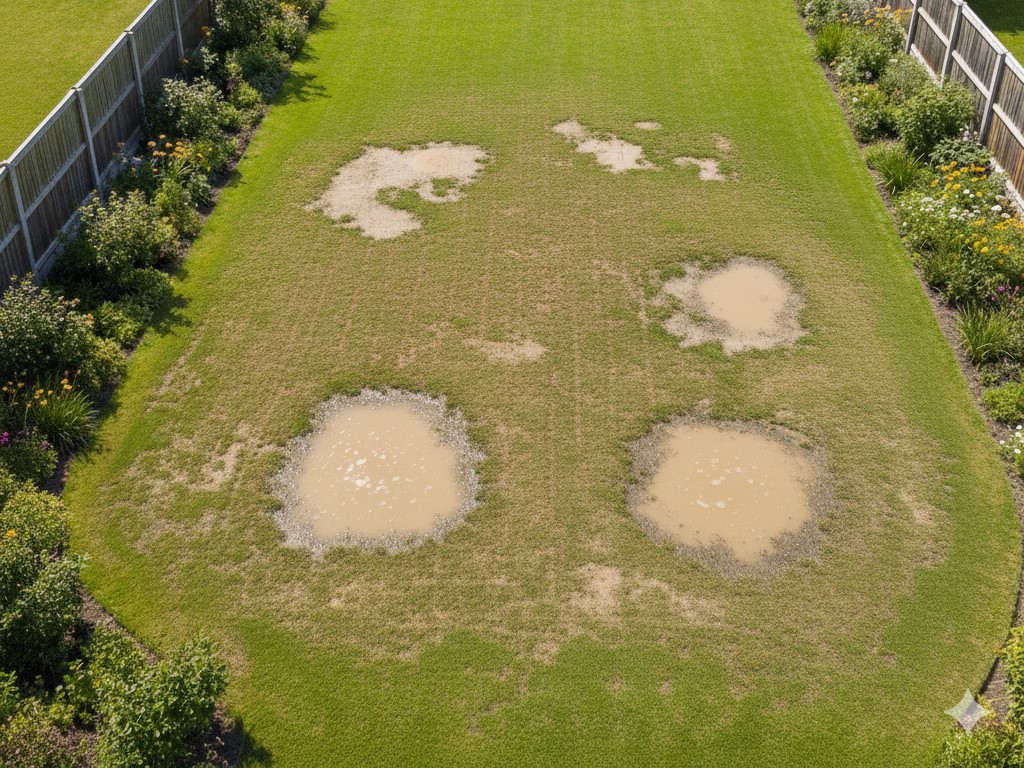
Is your garden suffering from a perpetual case of the squishy-feet syndrome? You know the feeling: you step onto the grass after a bit of rain, and suddenly, you’re sinking into a mucky mess. Or worse—you have a patch of standing water that just won’t drain away. It’s frustrating, unsightly, and absolutely terrible for your grass.
The good news? You don't have to live with a soggy, waterlogged lawn. You just need the right knowledge. This is your complete, step-by-step guide to understanding, diagnosing, and implementing the best lawn drainage solutions for a dry, healthy, and beautiful patch of turf. We're going to dive deep into exactly how to fix a waterlogged lawn, turning you from a frustrated homeowner into a drainage expert.
Fixing poor drainage for lawn areas can seem like a daunting, technical task, but it’s actually a series of very manageable DIY steps. We’ll walk through the easy-to-implement surface fixes before moving onto the more advanced, but highly effective, underground systems. By the time you're done reading, you’ll know exactly how to conquer that poor drainage in garden once and for all. Let's get started on giving your grass the dry foundation it deserves!
Why Good Drainage is the Foundation of a Perfect Lawn
Before we get our hands dirty (or muddy, as the case may be), it’s vital to understand why your lawn needs to drain well. It's not just about stopping puddles; it's about life and death for your grass.
The Hidden Danger of Waterlogging
When water sits on or just beneath the soil surface for too long, it creates an anaerobic environment—meaning, the soil is starved of oxygen. Think of your lawn's roots like you: they need to breathe!
- Root Suffocation: Lack of oxygen effectively "drowns" the grass roots, causing them to weaken and eventually die.
- Disease Magnet: Soggy conditions create the perfect breeding ground for lawn diseases like Red Thread and Lawn Rust.
- Soil Compaction: Wet soil is easily compacted, especially when you walk on it, which only makes the drainage problem worse in a vicious cycle.
- Nutrient Runoff: Essential nutrients the grass needs get washed away before the roots can absorb them.
A lawn that drains properly is a lawn that breathes, allowing for deep, strong root growth, optimal nutrient uptake, and superior disease resistance.
Diagnosing Your Drainage Problem: Where Does the Water Come From?
Before you start digging trenches, you need to play detective. The fix for poor drainage in garden areas depends entirely on the cause. Is it a surface problem, a soil problem, or a slope problem?
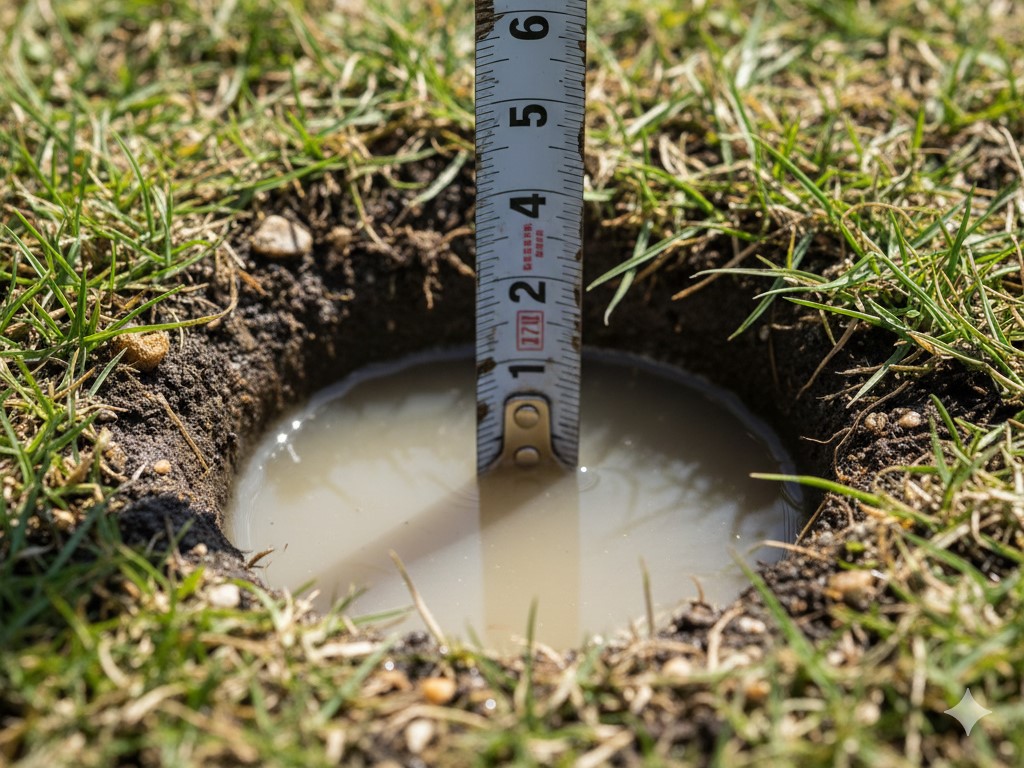
The Percolation Test: Your Soil's Speed Limit
This is the simplest, most effective diagnostic tool you have. It tells you exactly how fast (or slow) your soil is draining.
- Dig a Test Hole: Use a spade or auger to dig a hole about 30cm deep and 30cm wide in the problem area.
- Fill and Wait: Fill the hole completely with water and let it drain overnight. This saturates the surrounding soil.
- The Actual Test: The next morning, fill the hole with water again and measure the depth.
- Monitor Drainage: Set a timer and measure how far the water level drops every hour.
| Result | Diagnosis | Action Needed |
| Drains 2.5cm per hour or more | Excellent drainage. The issue is surface water runoff or a single, small compaction spot. | Focus on surface fixes like aeration and soil amending. |
| Drains 0.5 to 2.5cm per hour | Moderate to slow drainage. The soil is likely compacted or high in clay. | Focus on intense aeration and adding organic matter. |
| Drains less than 0.5cm per hour | Very poor drainage. You likely have a serious clay or hardpan layer, or a high water table. | Requires more intensive lawn drainage solutions like French drains or a soakaway. |
Other Common Causes
- Heavy Clay Soil: Clay particles are tiny and tightly packed, making it very difficult for water to move through them.
- Compaction: Years of walking, mowing, or even heavy machinery can press the soil together, creating a hard "pan" layer impenetrable to water.
- Inadequate Grading (Slope): If your lawn slopes towards your house or a specific area, water will naturally collect there.
- Underground Obstructions: Hard construction debris or a natural layer of rock can block the natural flow of water.
Surface-Level Lawn Drainage Solutions (The Easy Fixes)
If your percolation test showed moderate drainage, or if the waterlogging is a recent or minor problem, you can often solve it with these simple, non-invasive drainage for lawn techniques.
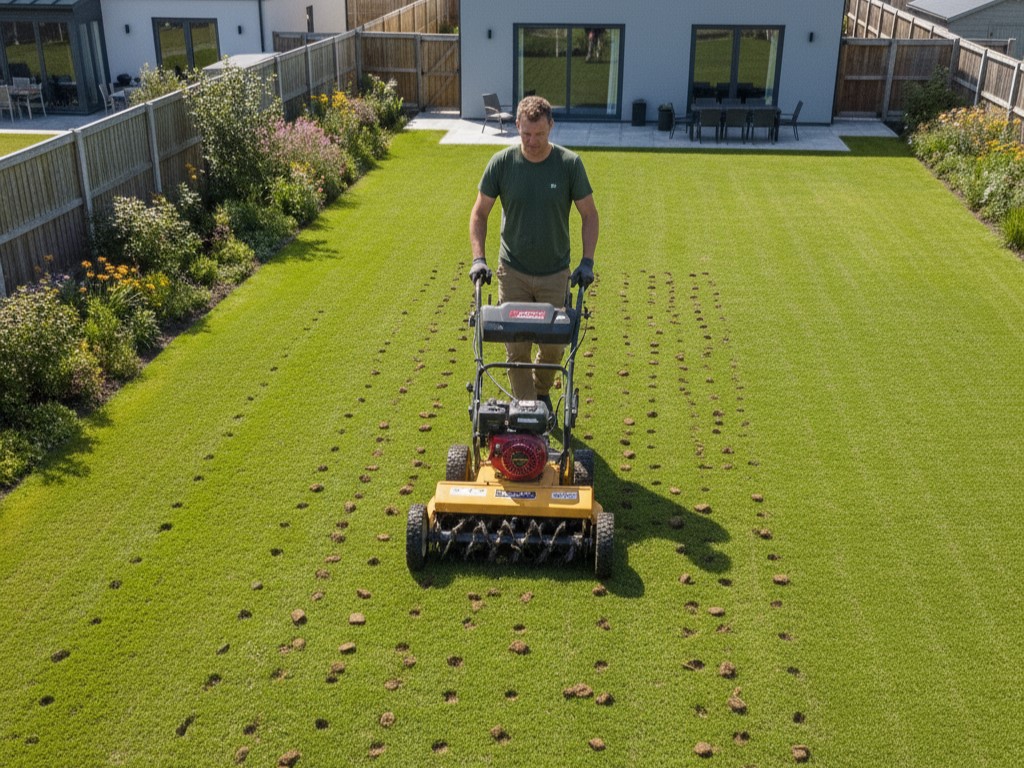
1. The Power of Aeration
Aeration is arguably the single most important step you can take to fix surface-level waterlogging. It's the process of punching small holes into the soil, typically removing tiny plugs of soil in the process (known as core aeration).
- How it Works: The holes break up compaction and allow water, air, and nutrients to penetrate the root zone easily.
- The Right Tool: A core aerator is always better than a spike aerator, as it removes soil, permanently reducing compaction, rather than just pushing it aside.
- When to Aerate: The best time is in the autumn (late August to October) when the grass is actively growing and can quickly recover.
2. Top Dressing with Organic Matter
Once you’ve aerated, the holes are perfect little pockets for introducing materials that will permanently improve soil structure. This is known as top dressing.
- Mix: Use a mix of sand (coarse, horticultural sand, NOT fine play sand) and compost or fine peat moss. A 70% sand to 30% organic matter ratio is a great starting point.
- Application: Apply a thin layer (about 0.5cm) of this mix over the lawn.
- Work it In: Use the back of a rake or a rigid brush to work the top dressing into the aeration holes.
The compost introduces beneficial microbes and structure, while the sand helps to physically hold the soil open, ensuring better drainage long-term. This combination is a fantastic way of tackling how to fix a waterlogged lawn without major disruption.
3. Overseeding the Thin Patches
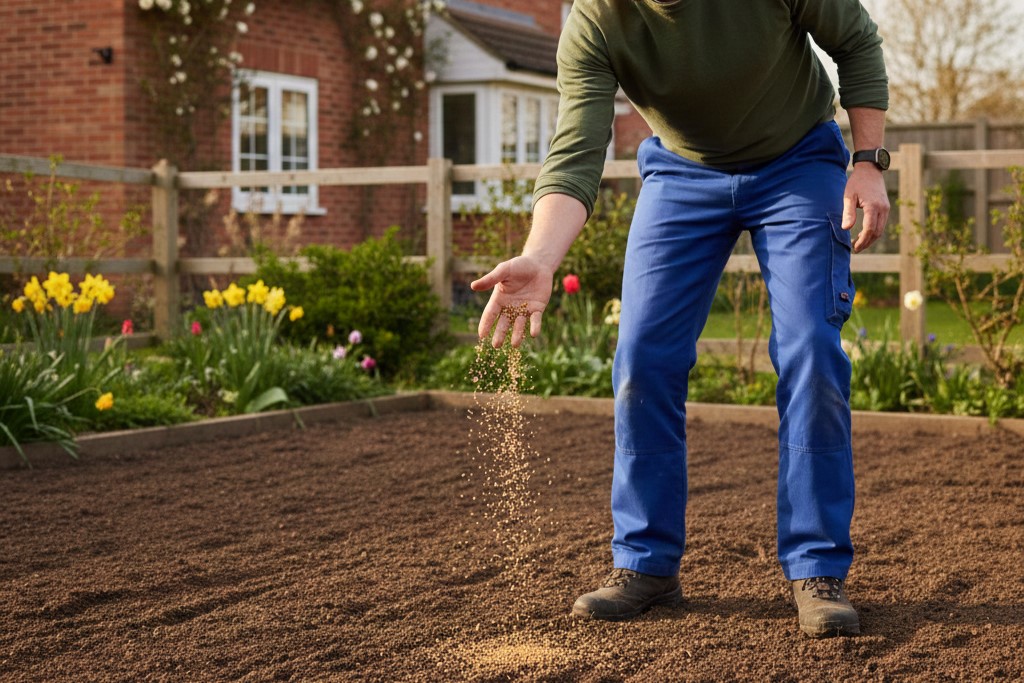
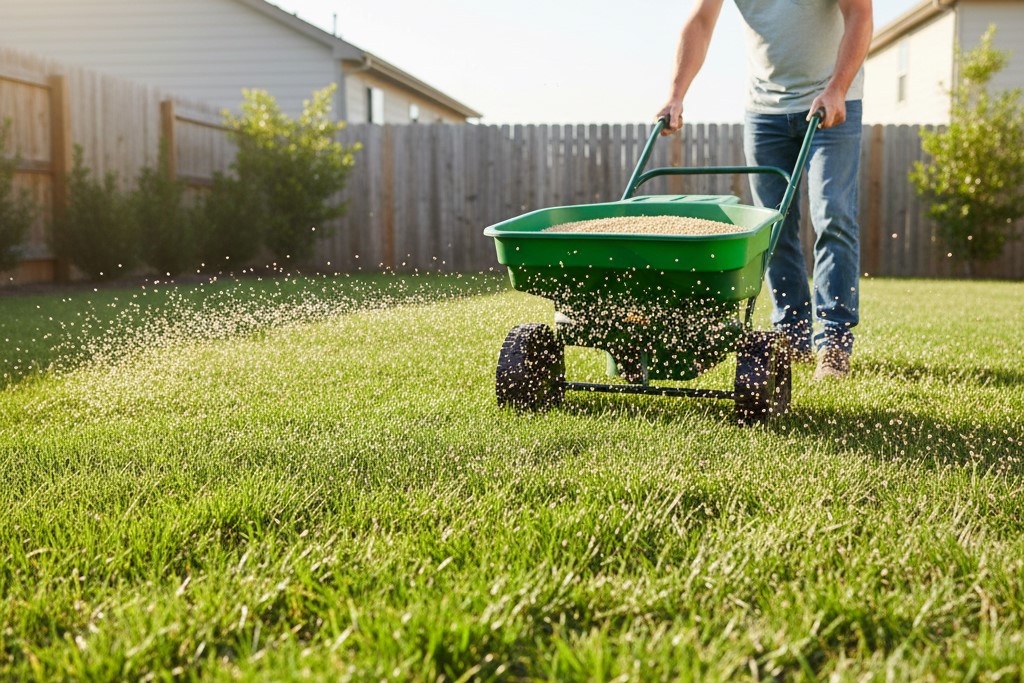
Soggy areas are often bare or thin because the grass has died off. These patches need re-seeding to introduce a dense covering of turf, which itself helps to take up excess moisture and improve soil structure.
- Choose the Right Seed: Look for a high-quality Ryegrass or Fescue blend, which are resilient and commonly used in UK lawns.
- Prepare the Spot: Lightly rake the bare soil to create a good seed bed.
- Sow and Protect: Sow the seed and lightly cover with a dusting of topsoil. Keep the patch lightly moist until germination.
Subsurface Lawn Drainage Solutions (The Big Fixes)
If your percolation test was abysmal, or if the surface fixes haven't made a noticeable difference, you may need to implement more robust, subsurface lawn drainage solutions. These require more effort but provide permanent relief from heavy waterlogging.
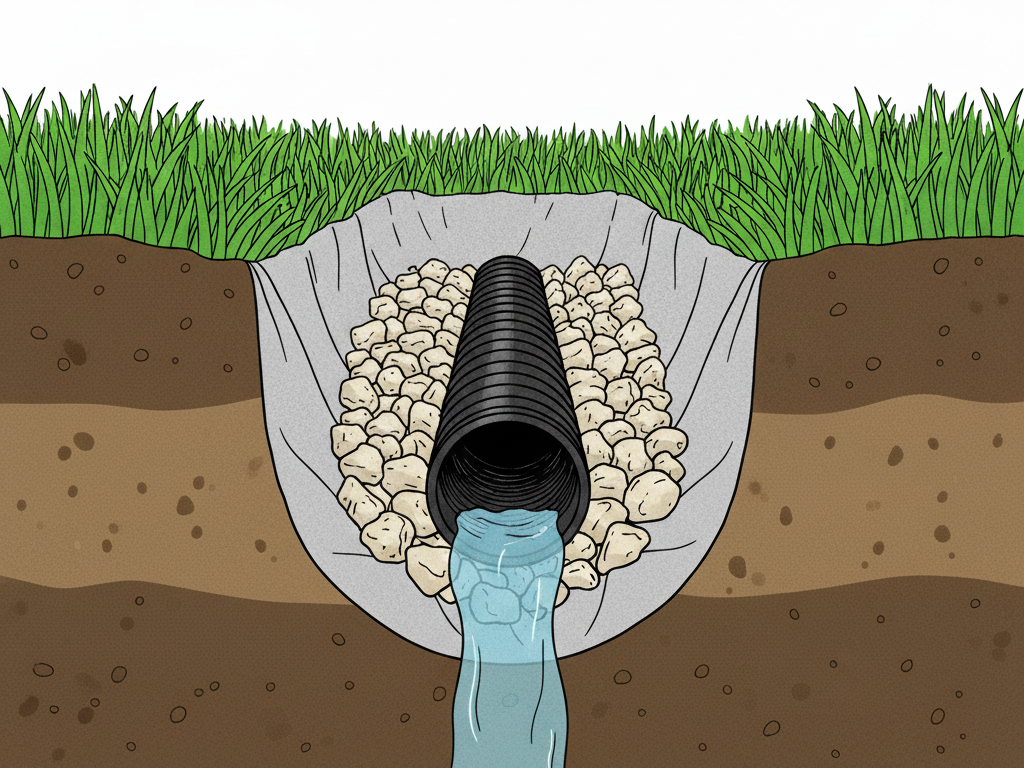
1. Installing a French Drain (The Classic Solution)
A French drain is a slightly-sloping, underground trench that collects water and diverts it away from the problem area. It is the gold standard for fixing major poor drainage in garden areas.
Key Steps for a DIY French Drain
- Plan the Route: The drain must run from the wet area to a suitable discharge point (e.g., a soakaway pit, a dry ditch, or a municipal storm drain—check local regulations first). It must slope downwards at a minimum of 1cm for every 3 metres of run.
- Dig the Trench: Dig a trench about 30–60cm deep and 15–30cm wide.
- Lay the Liner: Line the trench with geotextile fabric. This is crucial, as it stops soil and silt from clogging the drain but allows water through.
- Add the Gravel Base: Pour a 5–10cm layer of clean gravel (e.g., pea shingle) onto the fabric.
- Install the Pipe: Lay a perforated, flexible drainage pipe (often called a land drain) on top of the gravel. The holes should face down to allow water to filter up into the pipe.
- Backfill and Wrap: Fill the rest of the trench with gravel, leaving about 5–10cm at the top. Wrap the geotextile fabric over the top of the gravel, sealing the drain like a sausage roll.
- Final Cover: Cover the top with soil and re-turf or re-seed. The fabric and gravel will collect and channel the water away beneath the surface.
2. Building a Soakaway Pit
If you don't have a slope or a ditch to discharge your French drain into, you need a soakaway pit. This is a large, deep hole, filled with coarse materials, designed to temporarily hold and slowly disperse large volumes of water into the subsoil.
- Where to Put It: Place it in the lowest part of your garden, away from any building foundations (at least 5 metres).
- The Build: Dig a large pit (the size depends on the amount of water, but aim for at least 1m x 1m x 1m). Line it with geotextile fabric, fill it with rubble, large stones, and coarse gravel, and then wrap the fabric over the top.
- Connection: Connect your French drain or other surface drains directly into the top of the pit.
3. A Simple Trench Drain for Runoff
For areas that just suffer from water running over the surface (like a path sloping towards the lawn), a simple trench drain can be an effective lawn drainage solution.
- What It Is: A pre-formed plastic channel with a grate on top.
- Installation: Dig a shallow trench, set the channel in concrete slightly below the level of the surrounding grass/patio, and connect the outlet to a French drain or soakaway.
When the Problem is the Slope: Re-Grading Your Lawn
Sometimes, the geology of your land is the culprit, and no amount of aeration will help. If your lawn slopes towards your house or an area where water naturally collects, you may need to re-grade (change the slope) of the land.
The Gentle Slope
A healthy lawn should slope away from any buildings at a rate of at least 2cm for every 1 metre of length. This ensures all surface water runs away from the property.
- Measure: Use stakes and string, along with a line level, to map out your existing slopes.
- Topsoil: Bring in fresh, high-quality topsoil to raise the level of the lower areas.
- Compaction: When laying the new soil, compact it lightly in thin layers (no more than 10cm at a time) to prevent future settling.
- Seed or Turf: Once the correct grade is established, lay new turf or re-seed the area.
If the slope is dramatic, or if it involves a very large area, this is one of the few jobs you might consider getting a professional in for, just to ensure you don't compromise the stability of your home's foundation.
Long-Term Maintenance to Prevent Poor Drainage
Implementing effective lawn drainage solutions is a big step, but maintaining a dry, healthy lawn requires a commitment to good practices. Prevention is always easier than cure!
1. Regular Aeration and Scarification
Make aeration and scarification (light raking to remove moss and thatch) a non-negotiable part of your annual lawn care routine, ideally every autumn.
- Thatch Management: A thick layer of thatch (dead grass material) acts like a sponge, holding water on the surface and preventing it from reaching the soil. Regular scarification removes this layer.
2. Choose the Right Mowing Height
You might be surprised to hear this, but your mowing technique affects drainage!
- Keep it High: Taller grass encourages deeper, stronger root growth. Deeper roots naturally break up the soil structure and create channels for water to drain.
- Mow Often: Never remove more than one-third of the blade height in a single mow. This stresses the grass less and keeps it healthy.
3. Avoid Walking on Wet Areas
This is a simple one, but often overlooked. Walking, mowing, or driving anything over wet soil is the fastest way to cause severe compaction, which undoes all the hard work you’ve done on your lawn drainage solutions. If it’s squishy, stay off it!
Conclusion: Take Control of Your Waterlogged Lawn
Dealing with a waterlogged garden can be a real headache, but hopefully, you now feel empowered to tackle the issue head-on. Whether your situation calls for a simple dose of aeration and top dressing, or a larger project like a French drain, you have the knowledge to move forward.
Remember the key takeaways: diagnose the problem first with a percolation test, and then choose the appropriate lawn drainage solutions—from simple surface fixes to more intensive subsurface systems. By combining a good drainage strategy with smart, regular maintenance, you'll be well on your way to a truly perfect, envy-worthy lawn that can handle the unpredictable British weather without turning into a bog!

0 Comments